Arizona
Arizona Is Changing Fast. Here’s What’s Driving the Boom.
New chip factories. Red-rock neighborhoods. Gardens in the desert and snow on the canyon rim. Arizona’s next chapter is taking shape—and the real story goes deeper than a growth ranking.
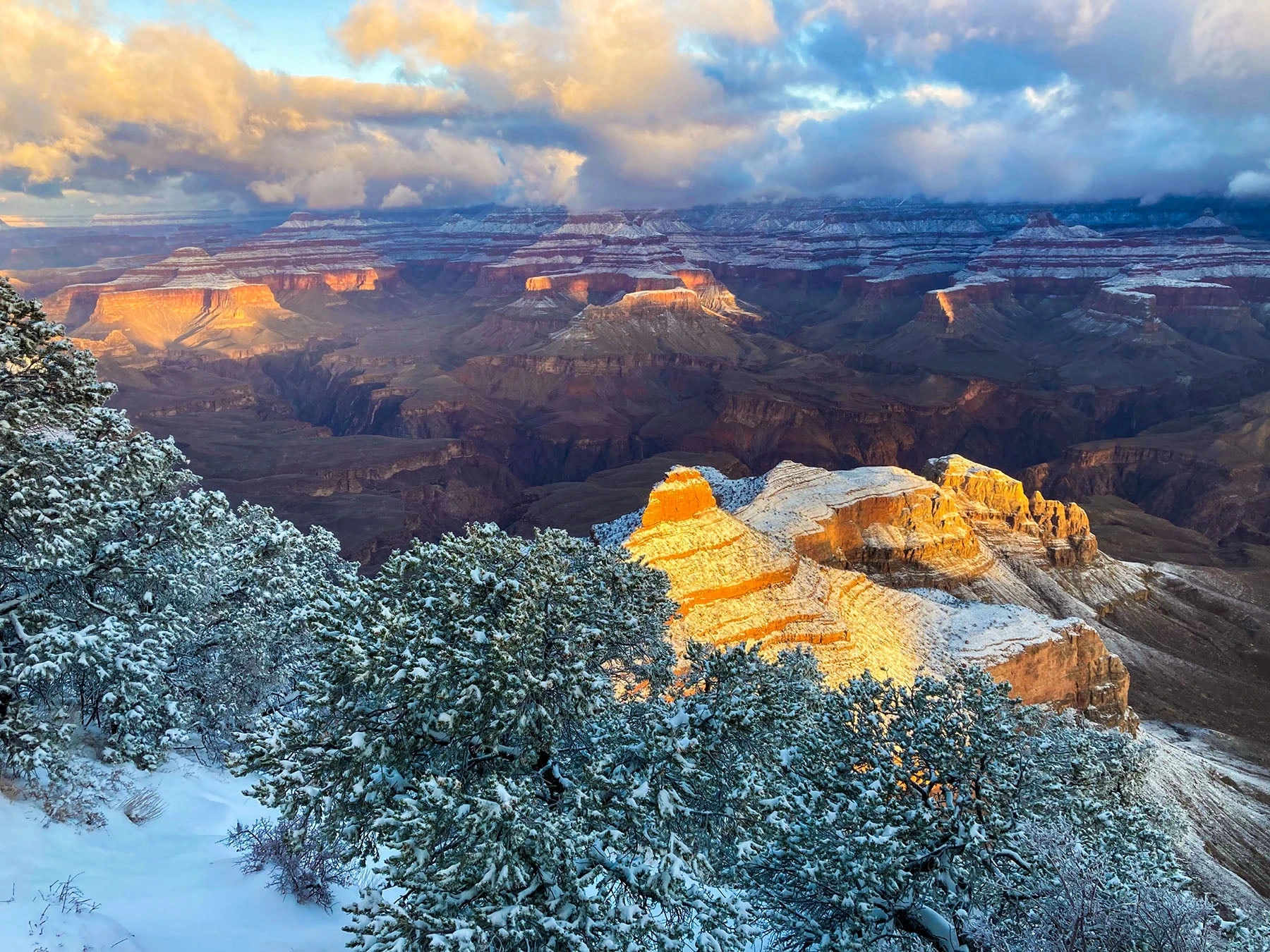
A snow-covered canyon glowing at sunrise. A Phoenix garden lit gold around the edges. Homes tucked beneath Sedona’s red rocks. Arizona can still surprise people who have lived here for years. As its population and industrial footprint change, the question becomes more personal: what is the state becoming, and will more people be able to enjoy what makes it special?
At a glance
- Population
- 7.62 million · Census estimate, July 2025
- Annual growth
- +67,394 residents · July 2024–July 2025
- National position
- 7th by residents added · 8th by growth rate
- Research
- 32 original sources · Checked October 12, 2026
First, what the growth numbers actually say
Arizona added an estimated 67,394 residents between July 1, 2024, and July 1, 2025, bringing its population to 7,623,818. In the Census Bureau’s Vintage 2025 estimates, released in January 2026, that put the state seventh for the number of residents added and eighth for percentage growth. Its roughly 0.9% increase exceeded the national 0.5% rate. South Carolina grew fastest by percentage; Texas added the most people.
The more revealing number is inside the total. Net migration accounted for 59,326 of Arizona’s additional residents: 31,107 from movement between states and 28,219 from international migration. Births exceeded deaths by 7,649; a small statistical residual completes the estimate. In other words, people moving in, after accounting for people moving out, drove most of the increase. “Everyone is moving here” remains an exaggeration, but migration really is central to the story.
Those figures explain how the population changed. They do not tell us why each household moved. A job, family ties, retirement, a relationship, housing, or a preferred climate may influence an individual decision. It would be a leap to attribute all those arrivals to chip factories or beautiful scenery.
For residents, the useful question is what this additional demand means locally: whether there are enough homes, whether job opportunities match household needs, and whether the places that make Arizona appealing remain accessible.
Sources: U.S. Census Bureau — 2025 population growth and state rankings · U.S. Census Bureau — Vintage 2025 population and components dataset
The boom looks different from one county to the next
A state can grow while some of its communities shrink. Arizona’s Office of Economic Opportunity illustrates that unevenness in its own July 2025 estimates: Pinal County grew 3.7% and passed 502,000 residents, while Apache, Coconino, and Gila counties recorded small declines. Several fast-growing municipalities sit around the expanding metropolitan edges, including Buckeye, Goodyear, Queen Creek, and Maricopa.
You may also have seen a larger statewide gain of about 97,000 residents, or 1.3%. That comes from the state’s estimate series. The Census Bureau and Arizona’s state office produce separate estimates; their numbers should not be spliced together to manufacture a national ranking. This article uses Census figures for comparisons between states and identifies the state series when discussing its local findings.
The distinction matters beyond statistical housekeeping. A new resident in a fast-expanding suburb may experience growth through construction and a changing commute. A resident of a smaller community may be more concerned about retaining services. Neither experience is adequately described by a single statewide superlative.
Sources: Arizona Office of Economic Opportunity — July 2025 population overview · U.S. Census Bureau — estimate vintages and revisions
Chip factories are changing the economic map
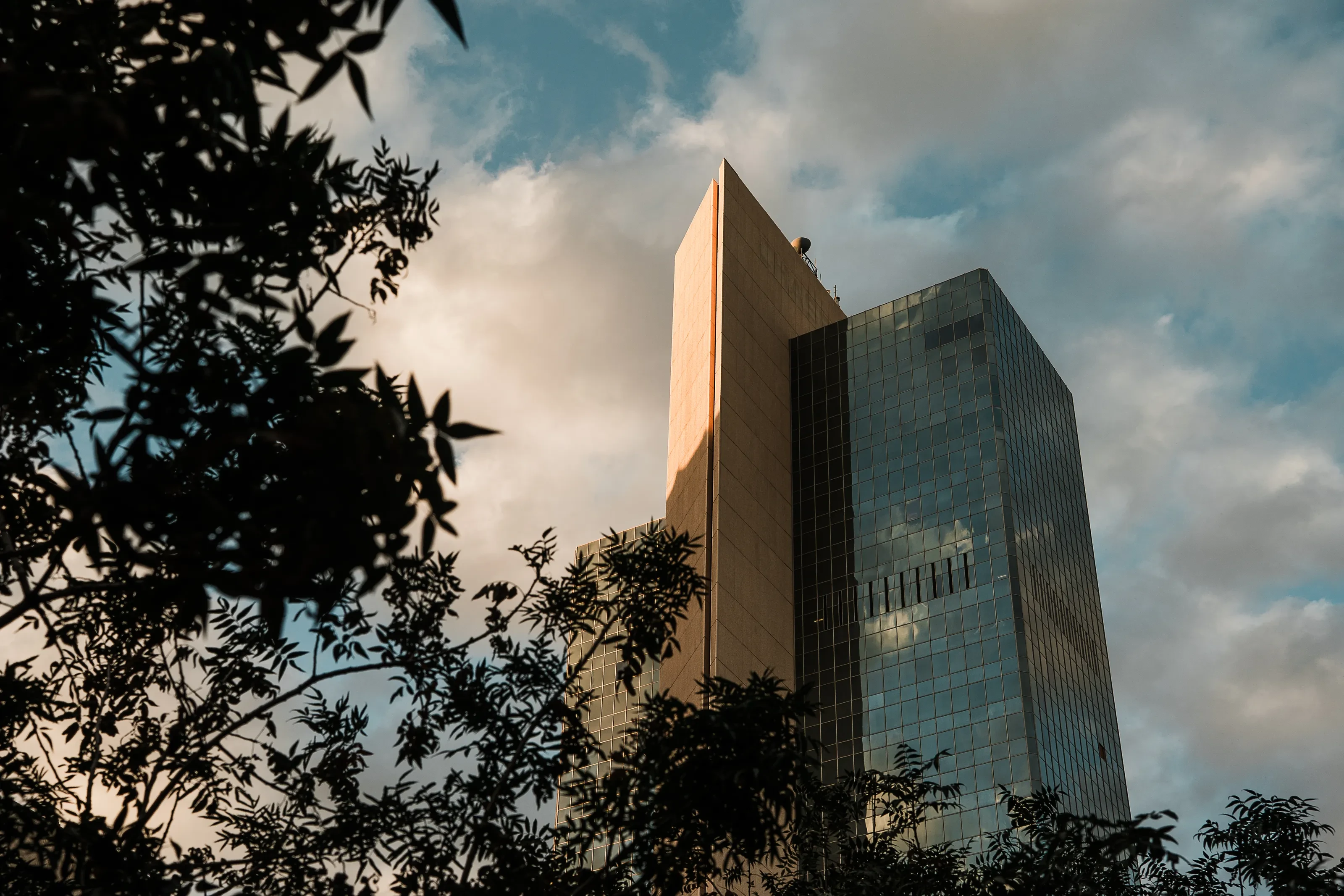
Arizona’s semiconductor expansion gives the growth story a concrete industrial dimension. In March 2025, TSMC announced plans to bring its total U.S. investment to $165 billion, adding three fabrication plants, two advanced packaging facilities, and a research and development center to its plans. Its first Arizona factory had already entered volume production in late 2024.
The difference between those two statements is essential. Production is an operating milestone. A multiyear investment announcement is a commitment to future development, subject to execution. The headline total cannot be treated as money already spent in Arizona, a current payroll, or a count of jobs available today.
Intel provides another important piece. In October 2025, the company announced that Fab 52 in Chandler was operational. Its Arizona presence and local education partnerships also make clear that semiconductor manufacturing here has a history; the industry did not arrive with one recent announcement.
Together, these projects create a credible reason to watch Arizona’s manufacturing economy closely. Their value to residents will depend on the work that follows: operating facilities, reliable supplier networks, durable employment, and opportunities that people living here can qualify for. A factory’s construction workforce, its eventual operating staff, and jobs supported elsewhere in the economy are different groups. Adding them together without definitions makes a project sound more certain, and more immediately transformative, than the evidence allows.
Sources: TSMC — March 2025 U.S. expansion announcement · Intel — Fab 52 and Panther Lake announcement, October 2025 · Intel — operations and community investment in Arizona
A bigger economy needs more than megaprojects
The practical bridge between an investment announcement and a household’s income is access to work. Maricopa Community Colleges’ Semiconductor Quick Start program is one example: a ten-day introduction to foundational technician skills. It offers a route for exploring the field, but finishing an introductory course does not guarantee a job or satisfy every employer’s requirements.
The broader economy also deserves attention. The University of Arizona’s August 2026 outlook reported that statewide jobs were up 0.7% from a year earlier in June, after seasonal adjustment. Healthcare and private education, along with professional and business services, contributed to gains in the separate unadjusted industry figures. Growth was continuing, but this was not an across-the-board employment surge.
A June 2026 university analysis likewise put preliminary Arizona real economic growth at 2.0% in 2025, down from 4.5% in 2024. “Boom” describes the scale of the state’s ongoing transformation better than it describes every current indicator.
Even the airport offers a useful reality check. Phoenix Sky Harbor recorded about 51.6 million passengers in 2025, below roughly 52.3 million in 2024. That is substantial activity, but passenger totals count journeys, not unique visitors or new residents. A busy terminal shows connections and movement; it cannot establish the reasons people relocate.
For anyone assessing an opportunity here, the better questions are specific: Which employers are hiring in my field? What qualifications do they require? Where is the actual workplace? What does the income leave after housing and transportation?
Sources: Maricopa Community Colleges — Semiconductor Quick Start · University of Arizona Eller — third-quarter 2026 economic outlook · University of Arizona — Arizona’s Economy Battered by Uncertainty · Phoenix Sky Harbor — annual airport statistics
The housing bargain has become harder to find
The old promise of growth is simple: more opportunity, with enough room for everyone. Housing is where that promise meets a household budget.
Common Sense Institute Arizona’s 2026 housing report estimated an immediate shortfall of about 56,000 homes for 2025. Its cumulative measure was much larger, about 111,000. Those numbers are not competing counts of empty building sites. They come from different modeling approaches: one addresses current demand and vacancy conditions; the other considers accumulated household formation. They are the institute’s estimates, rather than an official inventory of physically “missing” homes.
The report also found that home prices fell 2.9% in 2025. Even after that easing, its February 2026 statewide average of about $421,000 remained roughly $143,000 above the end of 2019. That combination explains why a softer market can still feel expensive to a buyer: a recent price decline does not undo the increases that came before it.
Supply also takes time to respond. The University of Arizona’s August 2026 outlook reported that housing permits fell 17.5% in the first half of the year compared with the same period in 2025. Permits are a signal of future building activity, not completed homes available to move into.
For residents, affordability deserves a wider calculation than the listing price: monthly payment or rent, utilities, insurance, transportation, and the time a location demands. A home that fits one line of a budget may put pressure on another. Arizona’s growth becomes more broadly beneficial when people can reach the opportunities it creates without exhausting their income simply living nearby.
Sources: Common Sense Institute Arizona — Housing Affordability in Arizona 2026 · University of Arizona Eller — third-quarter 2026 economic outlook
Part of Arizona’s appeal is how much it changes with elevation
To understand the state beyond the development announcements, look uphill. In Saguaro National Park’s Rincon Mountain District, elevations run from 2,670 to 8,666 feet. The National Park Service identifies six distinct biotic communities within that range, from desert scrub to mixed conifer forest.
That is a useful corrective to the idea of Arizona as one enormous, uniform desert. The differences are physical: elevation changes the setting, the vegetation, and the conditions a visitor encounters. The high country and the low desert offer very different experiences, even when they appear within the same state outline on a map.
Our reading of this variety is straightforward: it gives residents unusually different ways to spend time outdoors without choosing an entirely different state. It is part of Arizona’s appeal, although the population estimates cannot measure how much it influences relocation. The following places show what that variety looks like on the ground.
Sources: National Park Service — Saguaro National Park ecosystems · National Weather Service Flagstaff — regional geography and climate
Four gardens that change how you see the desert
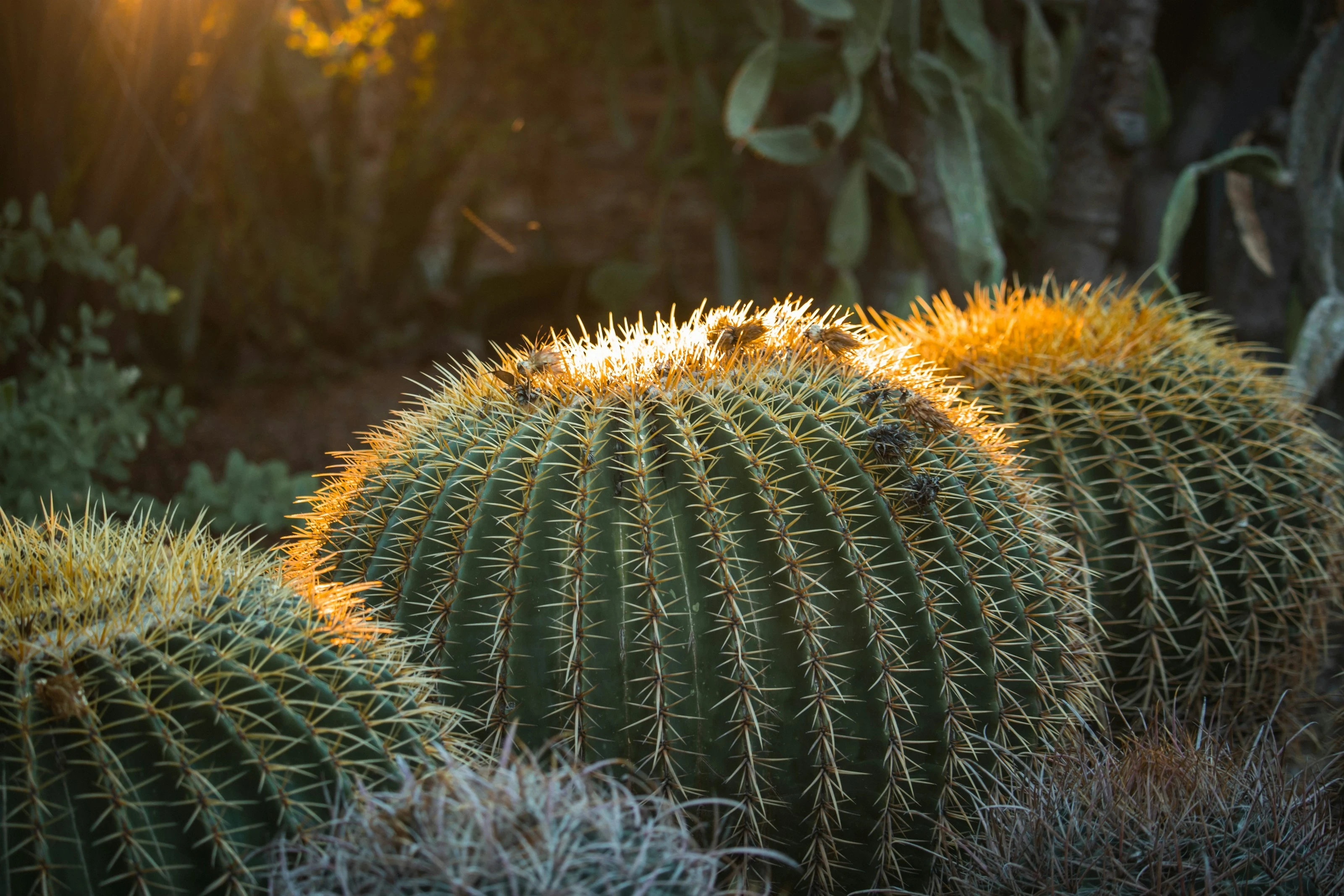
Start with Desert Botanical Garden in Phoenix. Its five trails cover 55 acres, giving visitors a deliberate way to look at desert plants rather than treating them as the scenery between parking lot and viewpoint. A cactus garden rewards attention to shape, texture, shadow, and season. The golden light in the photograph below is a good reminder that a garden does not need a lawn to be beautiful.
For a different landscape, Boyce Thompson Arboretum sits near Superior on US 60. Its visitor guidance describes unpaved trails and encourages allowing time to explore. Make it the main event of a day, with comfortable footwear and a plan suited to the weather, instead of squeezing it into a hurried stop. It is an independent nonprofit arboretum; older descriptions of it as a state park can mislead.
In central Phoenix, the Japanese Friendship Garden offers another interpretation of green space. Ro Ho En is a 3.5-acre garden rooted in the relationship between Phoenix and its Japanese sister city, Himeji. Water, stone, bridges, and carefully composed planting belong to a designed stroll garden. Its beauty is cultural as well as botanical; it should not be mistaken for a naturally occurring Sonoran habitat.
In Tucson, Tohono Chul connects garden design more directly to the surrounding desert. Its 49-acre grounds include a rainwater harvesting garden that demonstrates ways of directing runoff into planted areas. That makes a visit useful as well as restorative: you can consider how a landscape handles the water it receives.
Together, these gardens offer four distinct outings and four ways of looking at Arizona. They also suggest an everyday question for a growing state: can the care and thought visible in a special garden become more common along the routes people use every day? Check each venue’s current opening hours and admissions before choosing a date.
Sources: Desert Botanical Garden — official visitor guide · Boyce Thompson Arboretum — directions and visitor questions · Japanese Friendship Garden of Phoenix — Ro Ho En · Tohono Chul — gardens and rainwater harvesting
Sedona’s scenery is also someone’s neighborhood
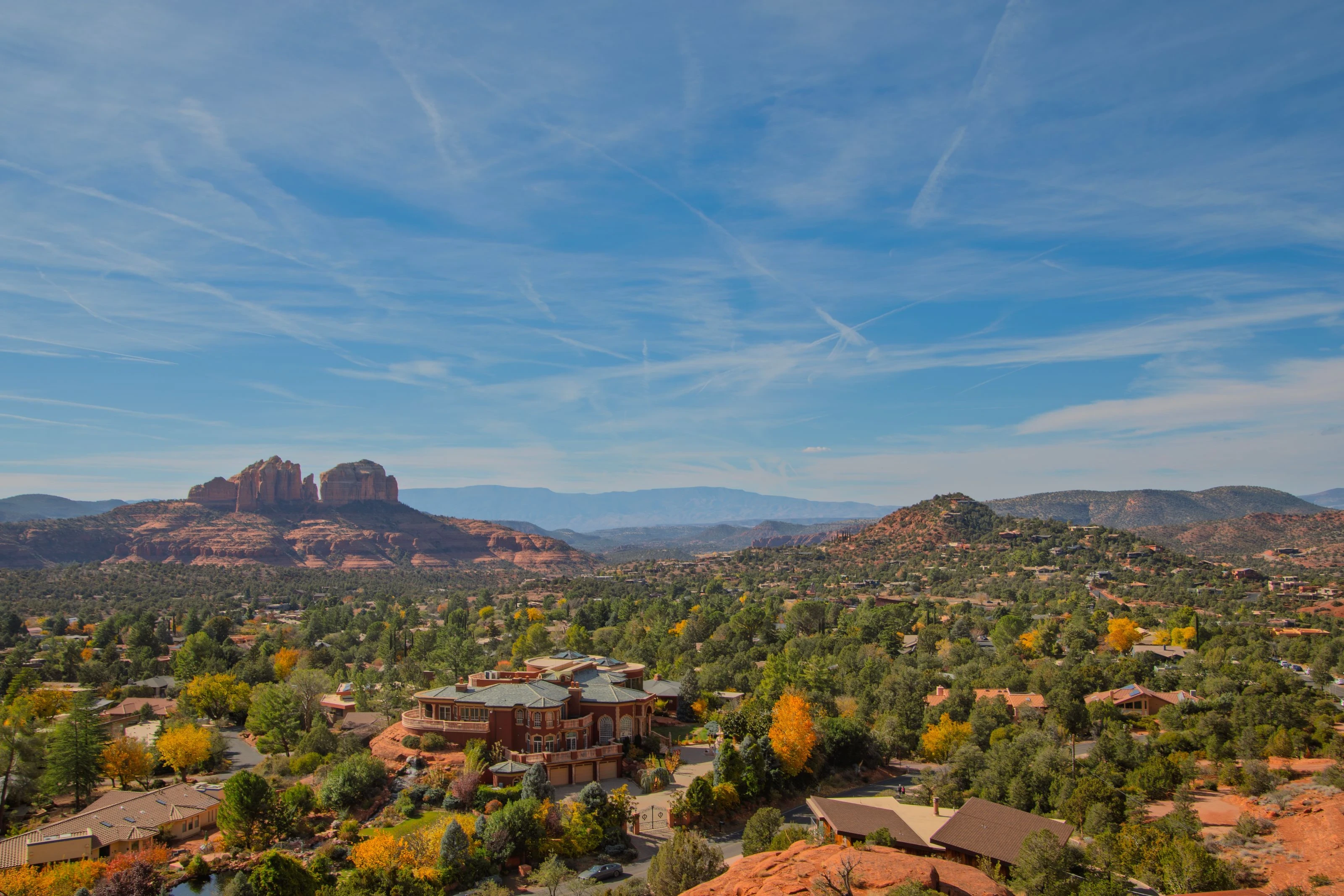
Sedona makes the attraction of Arizona immediately visible: red sandstone, expansive views, and trees that change the texture of the landscape. But the houses in the photograph below belong in the story too. A scenic destination is an inhabited place, with the ordinary needs of residents alongside the expectations of visitors.
To see a greener part of this landscape, consider Red Rock State Park. Its nature preserve follows Oak Creek through riparian vegetation, placing water and plant life alongside the rock formations. Visit for the trails and the setting: swimming and wading are not allowed there. It is a different experience from the swimming destination suggested by the name of nearby Slide Rock State Park.
For popular trailheads, Sedona Shuttle provides an alternative to building a day around finding a parking space. Consult the actual route and service calendar for the trail you choose; do not assume every trail or every day is covered.
The larger point is about the quality of a visit. Choose one or two places and give them time. Leave room for the practical parts of reaching them. A photograph can make a landscape look unlimited, while the roads, parking spaces, and access points serving it are very specific.
Sources: Arizona State Parks — Red Rock State Park · Sedona Shuttle — trailhead routes and service calendar
Yes, winter belongs in the Arizona picture
The snow-covered Grand Canyon at the top of this story is a real winter scene. Northern Arizona’s elevation makes winter a fundamental part of its identity, not an exception that needs explaining away. The forests and San Francisco Peaks near Flagstaff offer another view of the state that a saguaro silhouette alone cannot convey.
At the Grand Canyon, the South Rim is a year-round destination, but a year-round destination is not a promise of uninterrupted roads or ice-free paths. The National Park Service’s winter guidance describes snow, icy trails, and weather-related disruptions. The weather forecast and current conditions should determine the day’s plan.
ADOT’s winter guidance is similarly practical: postpone travel during winter storms when possible and check current road conditions. A route that looks easy on a map can demand a different decision when conditions change. Avoid treating a clear afternoon in Phoenix as evidence of what is happening farther north.
For residents, this range of seasons is an opportunity to keep discovering the state. It also rewards realistic planning: choose the destination for the conditions you can actually enjoy, with room to change course. A photograph records a moment; it does not book that weather for your weekend.
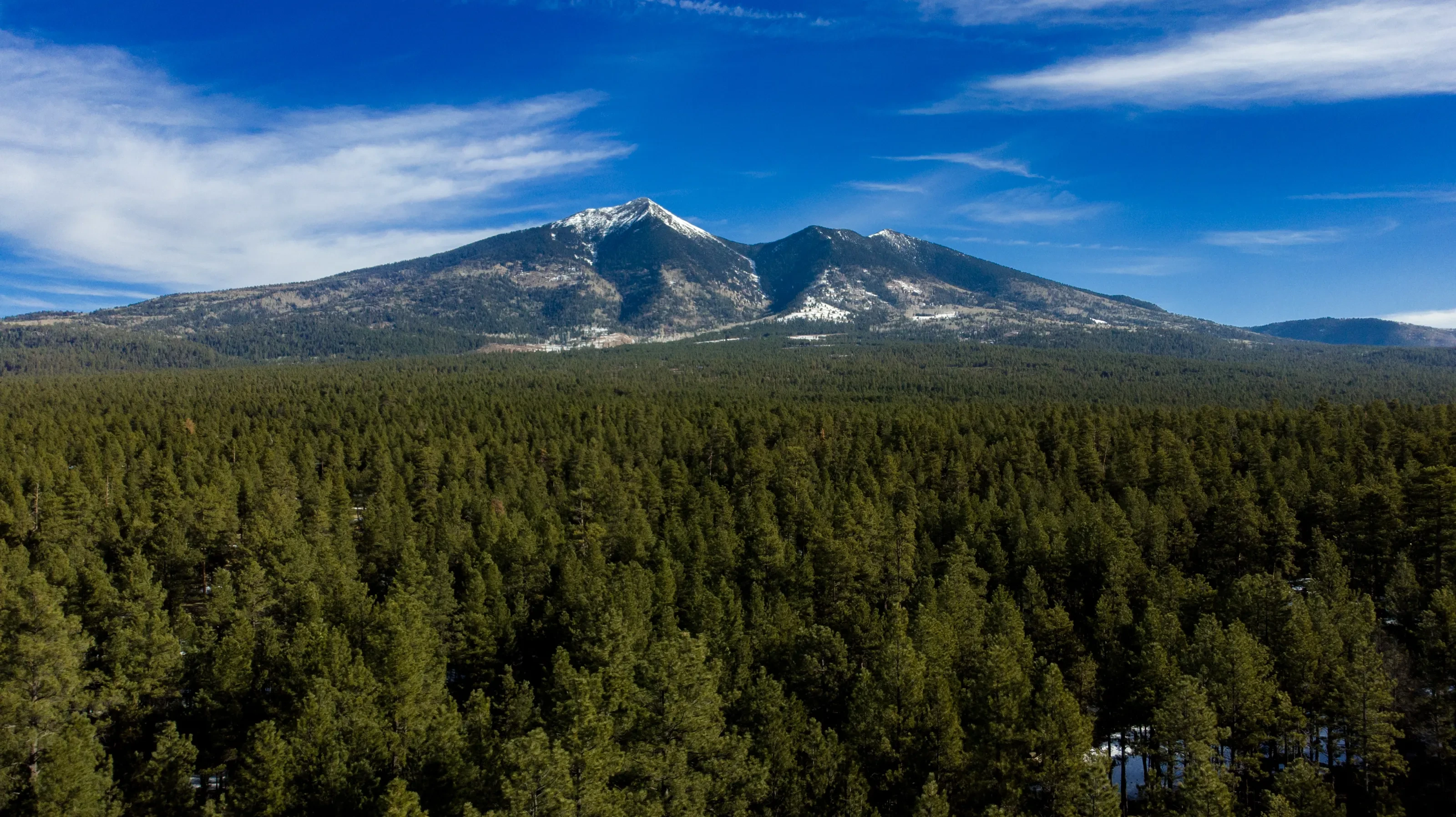
Sources: National Weather Service Flagstaff — regional geography and climate · National Park Service — Grand Canyon winter visits · Arizona Department of Transportation — winter storm travel guidance
Tucson’s appeal reaches beyond the latest growth cycle
A good account of Arizona also needs room for food, craft, and institutions that were here before today’s investment announcements. Tucson joined UNESCO’s Creative Cities Network in the gastronomy category in 2015. The local organization that manages the designation works with the surrounding foodshed as well as the city, supporting heritage foods, restaurants, artisans, and local food businesses.
That gives a visitor a more interesting starting point than a generic list of places to eat. Look for a meal that leads to a question: where an ingredient comes from, how a preparation developed, or who is maintaining a tradition. The designation recognizes a food culture; it is not a blanket rating for every restaurant in town.
Pairing a garden visit with time for a thoughtful meal offers a slower way to experience Tucson. The garden makes the environment tangible. The food provides another way to understand how people live within it. Neither requires pretending that a visitor can absorb an entire region in one afternoon.
For a growing state, those existing relationships matter. New investment can change the scale of a city, while the people who cook, grow, teach, and make things shape the reasons it feels like a particular place.
Sources: UNESCO — 2015 Creative Cities designations · Tucson City of Gastronomy — mission and food heritage · Tohono Chul — gardens and rainwater harvesting
Arizona was never an empty place waiting to be discovered
Language about a state “arriving” or being “discovered” can erase the people already there. At the Grand Canyon, the National Park Service works with eleven traditionally associated Tribes and presents their connections to the place through projects including We Are Grand Canyon. That is a living relationship, not simply an introductory chapter before the visitor attractions begin.
In Phoenix, the Heard Museum’s focus on American Indian art includes first-person Native perspectives and contemporary work. It offers a way to encounter artists and ideas rather than reducing Indigenous cultures to a visual theme for a Southwestern trip.
An article about Arizona’s future should hold that context alongside its growth figures. A population estimate measures residents at a point in time. It does not measure the depth of people’s connections to a landscape, their sovereignty, or the cultural significance of a place. Visitors can begin by listening to the institutions and communities presenting their own stories, and by respecting the access rules of the places they enter.
Sources: National Park Service — Grand Canyon associated Tribes · Heard Museum — mission and history
Water will shape where the next homes can go
Water is one of the clearest reasons to ask where growth happens, rather than only how much occurs. Arizona’s assured water supply framework requires qualifying developments in Active Management Areas to demonstrate a supply meeting a 100-year standard, alongside other requirements. The rules and protections are not identical everywhere in the state.
In the Phoenix management area, groundwater modeling has constrained approvals for new assured supplies that rely solely on groundwater. That is not a blanket ban on all homebuilding. ADWR explains that developments with existing certificates or within applicable designated supplies can continue, while other proposals need an acceptable route to a supply. Its modeling and program updates deserve attention because the details affect particular developments.
The Colorado River is a separate, connected challenge. CAP’s description of 2026 operations identifies a Tier 1 reduction of 512,000 acre-feet for Arizona: about 18% of its Colorado River allocation, equivalent to approximately 8% of total state water use. Those denominators matter. An 18% reduction in one source is not an 18% cut to every household’s tap water.
The responsible conclusion is neither that Arizona has unlimited room to grow nor that the entire state is about to run out of water at once. Different places depend on different supplies, infrastructure, and approvals. Anyone evaluating a specific home or development should establish the actual water provider and documented supply arrangements.
For the broader growth story, water planning is part of the foundation. It influences which promises can become durable communities, and under what conditions.
Sources: Arizona Department of Water Resources — assured and adequate water supply · Arizona Department of Water Resources — Phoenix groundwater supply updates · Central Arizona Project — Colorado River operations
Shade belongs beside roads and housing in the growth conversation
The appeal of outdoor life depends on whether people can use outdoor space. Maricopa County’s final report recorded 430 heat-related deaths in 2025, down from 608 in 2024. The decrease matters, and so does the remaining toll. These are county figures for completed years, not a statewide total or a count for 2026.
Phoenix’s Shade Phoenix plan, adopted in 2024, puts the built environment into this conversation. The city describes more than $60 million for a five-year effort, including targets for 27,000 new trees and 550 shade structures. These are program commitments and targets, not a claim that all the work has been finished.
A useful way to assess growth is to look at the ordinary trip: the walk to a bus stop, the route from an apartment to groceries, or the outdoor space near a school. Landscaping that looks attractive from a car does not necessarily make those routes comfortable or usable. Shade has to be in the places where people need it, with maintenance and appropriate water planning behind it.
This is where the garden photographs connect to the urban future. Careful planting, designed shade, and attention to local conditions can improve daily experience. A state’s beauty matters most when more of its residents can enjoy being outside.
Sources: Maricopa County — final 2025 heat-related deaths report · City of Phoenix — urban forest and Shade Phoenix plan
Some of Arizona’s best qualities take deliberate protection
Flagstaff’s dark sky identity offers an encouraging example. DarkSky International identifies it as the first International Dark Sky Place, designated in 2001, with a local history of lighting controls reaching back to 1958. Its night-sky reputation is supported by civic decisions as well as geography.
That is a useful model for thinking about growth. The qualities that attract attention can require rules, public investment, maintenance, and restraint to survive increasing use. Dark skies, healthy landscapes, comfortable streets, and access to meaningful places are things communities can work to sustain.
Long-range forecasts also need that context. The University of Arizona’s 2026 outlook projects continued population growth, but explicitly assumes that water will not become a substantial constraint. A forecast with that assumption is not independent proof that the water question has been solved.
The more productive way to read such a forecast is as a scenario to prepare for. If more people arrive, what needs to be ready? Homes and employment are part of the answer. Water systems, shade, cultural institutions, and the care of public places belong in it too.
Sources: DarkSky International — Flagstaff community designation · University of Arizona Eller — third-quarter 2026 economic outlook
Four ways to see this Arizona for yourself
You do not need to turn the whole state into a single ambitious road trip. These are four starting points for separate outings, chosen to connect the research to real places. Check venue calendars, conditions, and any required reservations before setting out; the suggestions are editorial combinations, not tested itineraries or promises of availability.
- Phoenix, with time to look closely: make Desert Botanical Garden the main stop, or choose the Japanese Friendship Garden for a different designed landscape. Leave time to notice how planting and shade change the experience of a city.
- Superior, for a garden-focused day: give Boyce Thompson Arboretum a generous part of the day. Use its visitor guidance to match the unpaved trails and the weather to your group’s needs.
- Tucson, through plants and food: explore Tohono Chul, then build the rest of the day around a local food business whose story interests you. Look beyond a ranking to the people and ingredients behind a meal.
- Northern Arizona, one landscape at a time: choose Sedona’s red-rock and creek setting, Flagstaff’s high country, or a Grand Canyon winter visit. Treat these as separate plans with their own conditions, not a checklist to rush through in one day.
Sources: Desert Botanical Garden — official visitor guide · Japanese Friendship Garden of Phoenix — Ro Ho En · Boyce Thompson Arboretum — directions and visitor questions · Tohono Chul — gardens and rainwater harvesting · Tucson City of Gastronomy — mission and food heritage · Arizona State Parks — Red Rock State Park · Sedona Shuttle — trailhead routes and service calendar · National Park Service — Grand Canyon winter visits · Arizona Department of Transportation — winter storm travel guidance
The next Arizona will be judged by everyday life
Arizona has enough substance for an ambitious growth story without borrowing a first-place ranking. People continue to arrive. Major industrial projects are moving from announcements toward operating facilities. Gardens, food traditions, red-rock country, forests, and winter landscapes give the state a range that even longtime residents can keep exploring.
The evidence also sets limits on easy optimism. Population and job growth have slowed. Housing remains a challenge. Water and extreme heat require decisions that a beautiful photograph cannot answer.
For people who already live here, the most meaningful version of growth is tangible: a good job within reach, a home that fits the budget, a dependable water supply, a shaded route through the neighborhood, and places still worth taking a visitor. Arizona’s future will be shaped by how well those pieces fit together. That is a story worth following long after the next ranking comes out.
Sources: U.S. Census Bureau — 2025 population growth and state rankings · TSMC — March 2025 U.S. expansion announcement · Intel — Fab 52 and Panther Lake announcement, October 2025 · University of Arizona Eller — third-quarter 2026 economic outlook · Common Sense Institute Arizona — Housing Affordability in Arizona 2026 · Arizona Department of Water Resources — Phoenix groundwater supply updates · Maricopa County — final 2025 heat-related deaths report
The details
A few good questions.
Is Arizona the fastest-growing state?
No. In the Census Bureau’s Vintage 2025 estimates for July 2024 to July 2025, Arizona ranked seventh in residents added and eighth in percentage growth. South Carolina led by percentage and Texas by number. The figures and source dataset are explained in the opening section.
Why do two different Arizona population growth numbers appear in the news?
The Census Bureau and Arizona’s Office of Economic Opportunity publish separate estimate series. The figures describe their respective estimates, not interchangeable measurements. Use a consistent source and vintage for comparisons; the county section explains the distinction.
Does Arizona really have snowy destinations and gardens?
Yes. Northern Arizona includes winter landscapes around Flagstaff and the Grand Canyon. Phoenix and Tucson also have distinctive botanical and cultural gardens. Snow and access depend on current conditions; see the garden and winter sections for specific places and official planning sources.
Does the groundwater decision stop every new home in metro Phoenix?
No. ADWR distinguishes proposals needing new groundwater-dependent assured supplies from developments covered by existing certificates or applicable designated supplies. The water section links to the agency’s explanation; a specific property requires a specific supply check.
Behind the story
Sources & further reading.
Research reviewed October 12, 2026. Check the linked providers for updates before travel.
- U.S. Census Bureau — 2025 population growth and state rankings · Checked 2026-10-12
- U.S. Census Bureau — Vintage 2025 population and components dataset · Checked 2026-10-12
- U.S. Census Bureau — estimate vintages and revisions · Checked 2026-10-12
- Arizona Office of Economic Opportunity — July 2025 population overview · Checked 2026-10-12
- TSMC — March 2025 U.S. expansion announcement · Checked 2026-10-12
- Intel — Fab 52 and Panther Lake announcement, October 2025 · Checked 2026-10-12
- Intel — operations and community investment in Arizona · Checked 2026-10-12
- Maricopa Community Colleges — Semiconductor Quick Start · Checked 2026-10-12
- University of Arizona Eller — third-quarter 2026 economic outlook · Checked 2026-10-12
- University of Arizona — Arizona’s Economy Battered by Uncertainty · Checked 2026-10-12
- Common Sense Institute Arizona — Housing Affordability in Arizona 2026 · Checked 2026-10-12
- Arizona Department of Water Resources — Phoenix groundwater supply updates · Checked 2026-10-12
- Arizona Department of Water Resources — assured and adequate water supply · Checked 2026-10-12
- Central Arizona Project — Colorado River operations · Checked 2026-10-12
- Maricopa County — final 2025 heat-related deaths report · Checked 2026-10-12
- City of Phoenix — urban forest and Shade Phoenix plan · Checked 2026-10-12
- Desert Botanical Garden — official visitor guide · Checked 2026-10-12
- Boyce Thompson Arboretum — directions and visitor questions · Checked 2026-10-12
- Japanese Friendship Garden of Phoenix — Ro Ho En · Checked 2026-10-12
- Tohono Chul — gardens and rainwater harvesting · Checked 2026-10-12
- National Weather Service Flagstaff — regional geography and climate · Checked 2026-10-12
- National Park Service — Grand Canyon winter visits · Checked 2026-10-12
- National Park Service — Saguaro National Park ecosystems · Checked 2026-10-12
- Sedona Shuttle — trailhead routes and service calendar · Checked 2026-10-12
- UNESCO — 2015 Creative Cities designations · Checked 2026-10-12
- Tucson City of Gastronomy — mission and food heritage · Checked 2026-10-12
- Heard Museum — mission and history · Checked 2026-10-12
- National Park Service — Grand Canyon associated Tribes · Checked 2026-10-12
- DarkSky International — Flagstaff community designation · Checked 2026-10-12
- Arizona Department of Transportation — winter storm travel guidance · Checked 2026-10-12
- Phoenix Sky Harbor — annual airport statistics · Checked 2026-10-12
- Arizona State Parks — Red Rock State Park · Checked 2026-10-12
Your next somewhere.
U.S. travel stories with sources you can follow and places worth making time for.
Our editorial approachExplore destinationsShare a little inspiration