Las Vegas, Nevada
Old Las Vegas, Still Glowing: A Day Downtown Beyond the Casino Floor
A former courthouse, a street that keeps reinventing itself, and signs rescued from demolition: follow the history connecting downtown Las Vegas’s most memorable stops.

A courthouse can survive by becoming a museum. A motel can disappear while its shell-shaped lobby finds another life. A casino name can keep glowing long after the business closes. Downtown Las Vegas is full of these second acts. This day pairs The Mob Museum, Fremont Street and The Neon Museum to explore what the city has kept—and what those surviving pieces reveal once you look beyond the spectacle.
At a glance
- Suggested rhythm
- Allow an afternoon and evening: Mob Museum, Fremont Street and a meal, then the Neon Museum at your reserved time. Adjust the order to your tickets.
- The transport detail
- The free Downtown Loop serves the Mob Museum and Fremont, but its published route does not stop at the Neon Museum.
- Research checked
- October 16, 2026. The Neon Museum’s 2026 ticket products and hours differ from its 2027 offering; check your date.
Start with the railroad, before the casino mythology
Downtown makes more sense when you begin with the railway. In 1905, railroad officials auctioned lots in a townsite beside the tracks, establishing the commercial core that grew around Fremont Street. There was already another townsite west of the railroad, laid out by J. T. McWilliams in 1904. The city incorporated in 1911. These are different milestones, and none begins with a mob boss building a casino.
That earlier geography is worth carrying into your walk. Near Fremont and Main, the story is of arrivals, supplies, rooms and businesses serving a developing town. Hotel Nevada, now the Golden Gate, opened in 1906. Gambling legalization and the start of Hoover Dam construction in 1931 later helped change the scale and direction of growth.
You do not need a long list of dates. Keep one question in mind: what did people need this place to do before it became a destination? The Mob Museum’s A Tough Little Town exhibit offers a useful starting point, connecting the railway, early businesses and the growth of casino signage. It also explicitly corrects the idea that organized crime created Las Vegas.
The day’s route follows that question through three kinds of surviving evidence: a civic building, a working entertainment street and a museum collection of signs. The pleasure is in seeing how differently each has carried its past into the present.
Sources: A Tough Little Town - The Mob Museum · Westside Timeline · City of Las Vegas: Reasons Vegas Is a Historical Gem · This Building of Ours - The Mob Museum
Give the Mob Museum a real afternoon
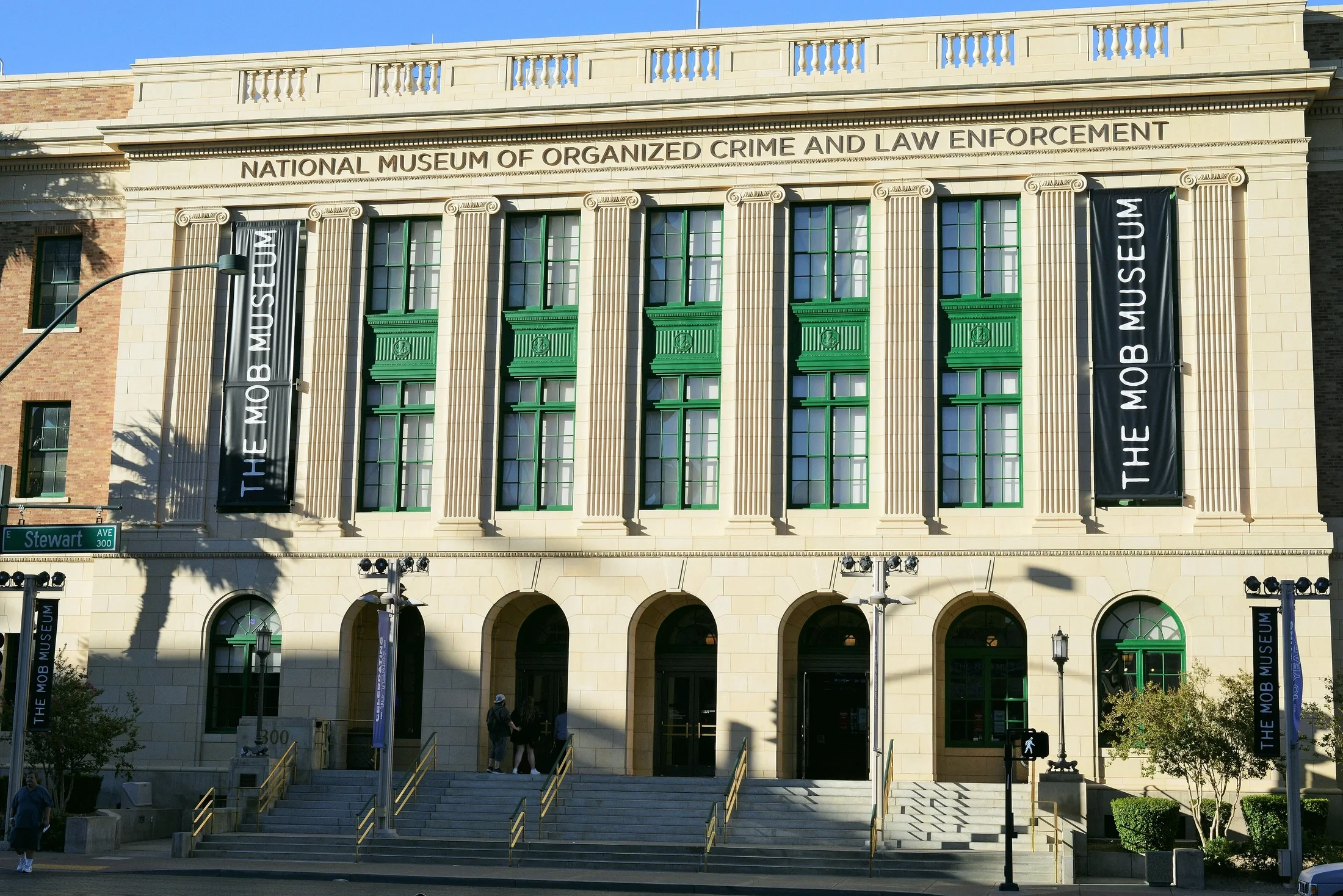
Begin the main part of the outing at The Mob Museum, 300 Stewart Avenue. The building opened in 1933 as a U.S. Post Office and Courthouse. It was a place to send mail, handle federal business and appear in court before it became a place to examine the history of organized crime.
Make the second-floor courtroom an anchor, while allowing for temporary event closures. On November 15, 1950, Senator Estes Kefauver’s committee held its Las Vegas hearing here. Today the restored room interprets that investigation with a multi-screen presentation. The significance is unusually direct: you are visiting the room where a part of the story took place, not a set built to resemble a gangster film.
Give yourself roughly two to three hours as a planning allowance, longer if you read closely or book extra experiences. The museum spans several floors. Its exhibit guide places early Las Vegas and Prohibition upstairs, casino history and the courtroom on the second floor, and contemporary organized crime and investigative subjects on the first. Choose a few themes to follow instead of measuring success by whether you completed every interactive activity.
The museum currently lists daily hours of 9 a.m.–9 p.m., with early closures posted separately. Compare the admission options before paying: experiences, audio tours and packages are not interchangeable. The Underground has its own hours and offerings. It can be an addition to the day, but a cocktail stop is not necessary to understand the building.
.jpg)
Sources: Plan Your Visit - The Mob Museum · This Building of Ours - The Mob Museum · Historic Courtroom - The Mob Museum · The Mob Museum in Downtown Las Vegas - Exhibits · The Mob Museum | Unique Museums in Las Vegas, Nevada
Look for the city inside the crime story
The museum’s full name—the National Museum of Organized Crime and Law Enforcement—helps set expectations. Its subject includes the effects of organized crime, the institutions that confronted it and the people caught in those histories. It is more interesting when you follow evidence and consequences than when you treat familiar surnames as celebrity sightings.
The building’s own history widens the frame. Federal agencies worked here; residents used the post office; new citizens took their oaths. In 1968, the Korean-born performing trio the Kim Sisters became U.S. citizens in this building. That episode connects entertainment history to civic life without needing another casino on the itinerary.
There is a productive connection to the evening’s Neon Museum visit, too. The former courthouse handled bankruptcy proceedings involving the Moulin Rouge, the hotel-casino whose surviving sign will lead you into the story of racial integration. A property can be remembered for a luminous name while the paperwork around it tells a more complicated story.
Let those connections guide your attention. The question is not whether the older city was more authentic or more glamorous. It is which parts of its history have survived, who is represented in them and what a visitor can learn by putting the pieces together. That gives the afternoon a thread you can follow outside the museum doors.
Sources: The Mob Museum in Downtown Las Vegas - About - Mission Statement · This Building of Ours - The Mob Museum · Kefauver Hearings - The Mob Museum · How Many of the Signs Light Up? | The Neon Museum Las Vegas
Walk Fremont as a street that keeps changing
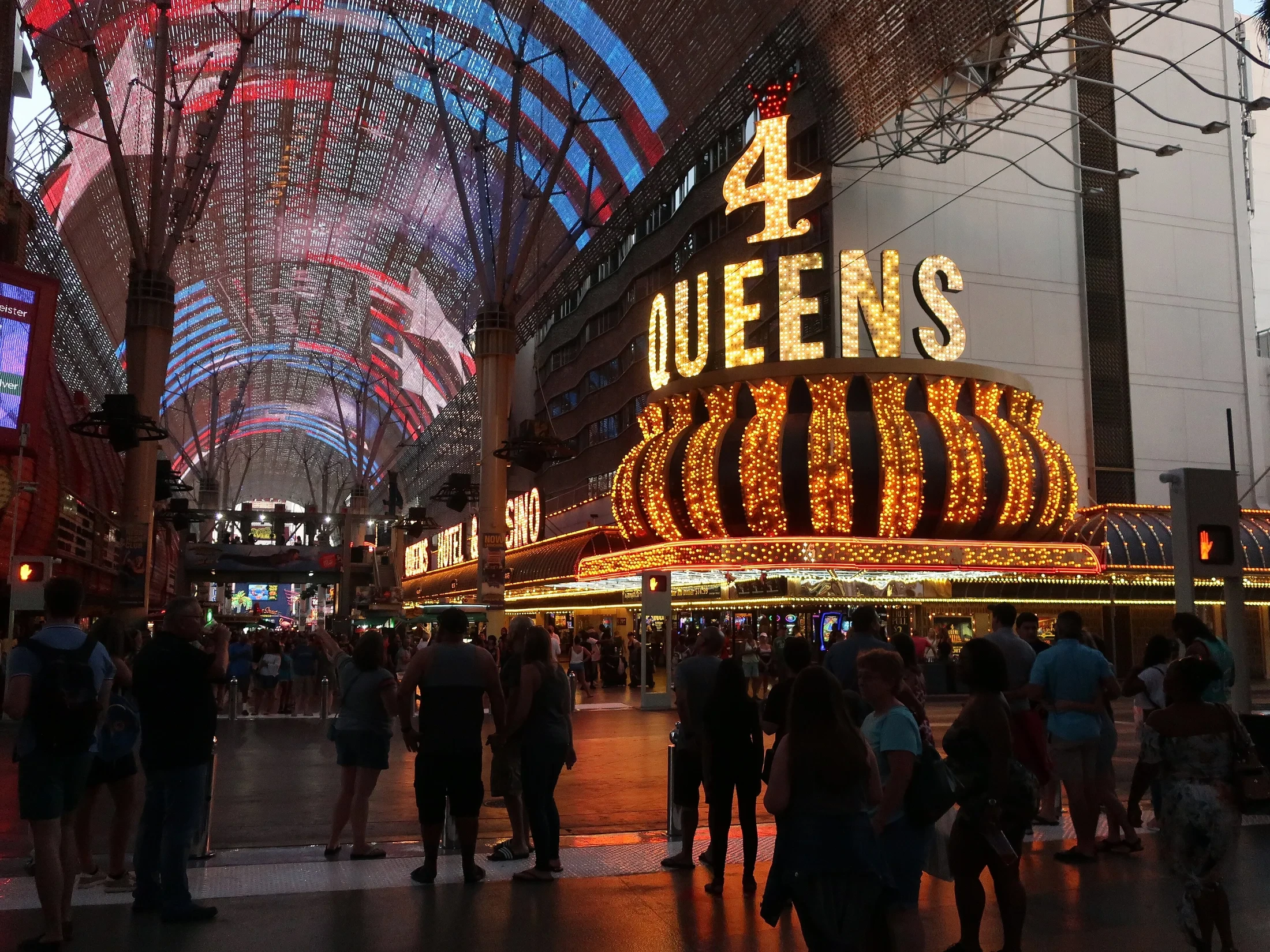
From the courthouse area, turn your attention to Fremont Street. The Fremont Street Experience occupies a five-block pedestrian entertainment district. Casino signs, crowds, stages and the overhead Viva Vision display compete for attention. This is an active entertainment area, not a preserved historical streetscape with every decade carefully separated.
That mixture is part of the interest. Look at how a sign addresses someone standing on the street: the size of the letters, the shape around a name, the promise made by a row of bulbs. Then look up at the canopy. The technologies differ, but both are designed to catch a passing person’s attention. You can appreciate that relationship without entering a casino or placing a bet.
The operator’s current schedule lists free Viva Vision shows at the top of each hour from 6 p.m. through 2 a.m. Treat the published lineup as something to check for your date. You can see one before or after the Neon Museum, depending on your ticket time; there is no reason to rush dinner just to fit every light show into one evening.
Fremont East offers another stretch to explore beyond the main canopy, with restaurants, bars and signs in the streetscape. Choose a meal where the menu and atmosphere fit your group. For this route, a comfortable break and enough time to reach the next booking matter more than chasing an unverified “best” restaurant claim.
Sources: About Fremont Street Experience in Downtown Las Vegas · Viva Vision Light Show Schedule | Fremont Street Experience · City of Las Vegas: Downtown Versus the Strip
At the Neon Museum, begin with the building
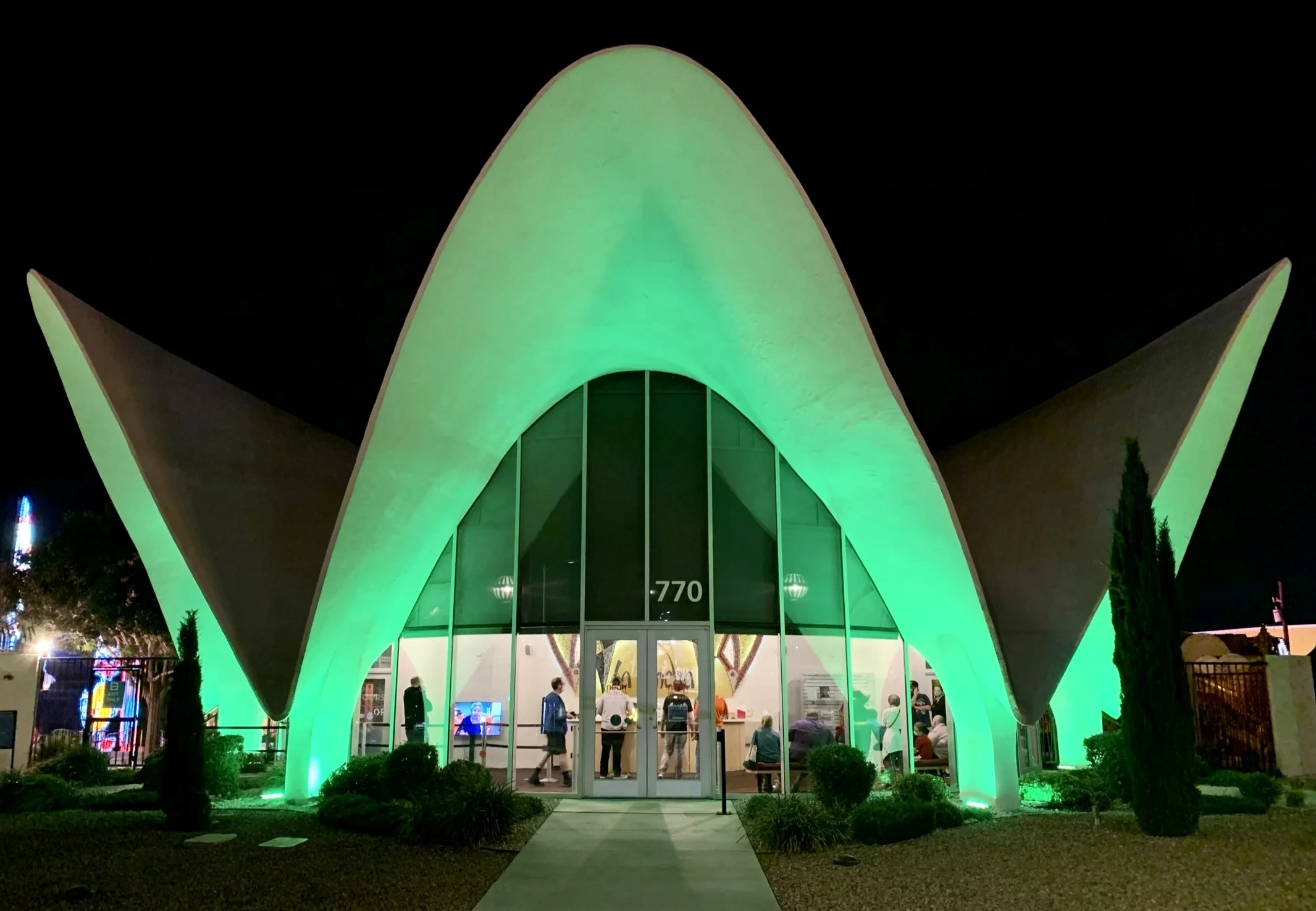
The Neon Museum currently welcomes visitors at 770 Las Vegas Boulevard North. Its visitor center is itself a rescued piece of architecture: the shell-shaped lobby of the former La Concha Motel. Architect Paul Revere Williams designed the building, originally constructed on the Strip in 1961. It was saved from demolition and moved to the museum site in 2006.
The curves are a good place to pause before the collection. A motel lobby had to announce arrival, welcome travelers and distinguish one roadside address from the next. Preserving the building lets those ambitions remain visible after the original motel has gone. The museum’s entrance is already telling the story you came to hear.
Continue into the outdoor Neon Boneyard with that idea in mind. Its signs come from businesses across Las Vegas, including places on the Strip, so this is not exclusively a collection of downtown artifacts. Some signs have been restored or arrived in working condition; others are illuminated from outside. An unlit sign can still reveal the construction, lettering and weathering that make the collection worth studying.
Do not confuse the Boneyard with Brilliant! Jackpot in the North Gallery. That separate audiovisual experience uses projection to reanimate signs that are not functioning on their own. Check what your selected ticket includes. Restored neon and projected light offer different ways of seeing the collection, and knowing the difference makes either experience more satisfying.

Sources: Neon Museum: Plan Your Visit · La Concha Visitors' Center | The Neon Museum · The Las Vegas Strip | The Neon Museum Las Vegas · Neon Boneyard - Neon Signs in Las Vegas | The Neon Museum · North Gallery - Las Vegas Art Gallery | The Neon Museum
Follow one sign into a bigger story
The Moulin Rouge sign is a useful example of why this collection deserves more than a quick photo circuit. Betty Willis, also known for the Welcome to Fabulous Las Vegas sign, designed its distinctive lettering. The hotel-casino operated for only a short period in 1955, but its history is much larger than that brief lifespan: it opened as Las Vegas’s first racially integrated casino.
Put that fact beside the city’s Westside history. Black entertainers and workers faced exclusion from many of the places that depended on their talent and labor. Businesses, boarding houses and institutions on the Westside supported a community shaped by those restrictions. The sign’s elegant lettering carries a story about access to the city, not just a vanished night out.
The museum reilluminated the Moulin Rouge sign in 2020. Restoration makes an object visible again, but interpretation is what gives that visibility meaning. If you enjoy this kind of connection, consider the museum’s guided history tour, currently described as a 45-minute add-on. Check its availability with your admission rather than assuming a guide accompanies every visit.
You will encounter names you recognize and businesses you have never heard of. Give the unfamiliar ones a chance. Motel, laundry and neighborhood-business signs can tell you as much about everyday Las Vegas as a famous resort name. The broader scenic-byway project carries that preservation work beyond the museum into the city’s streets.
Sources: How Many of the Signs Light Up? | The Neon Museum Las Vegas · Westside Timeline · Guided Tours - Las Vegas Museum Tours | The Neon Museum · Las Vegas Boulevard Scenic Byway Project
Arrange the evening around the ticket you actually have
For visits through December 31, 2026, the Neon Museum’s ticket page currently separates daytime admission, 3–5 p.m. starting at $25, from evening admission, 6–11 p.m. starting at $35. Those are starting prices, not a quote for every visitor or package. The page also sells a separate 2027 admission product, so select your travel date carefully and follow the hours on that booking.
Our suggested order is an afternoon at the Mob Museum, a Fremont walk and meal, then the Neon Museum at your reserved time. A later Fremont canopy show can be an optional finish. That gives the day two substantial paid attractions with a flexible stretch between them, instead of a timetable with a ticket at every hour.
Book the museum admission that matters most to you first, then work backward. Leave a generous transfer buffer, particularly if you plan to use transit or need time to find the correct pickup point. Arriving at the Neon Museum early does not automatically let you join an earlier tour, and arriving late can mean losing your place.
The Boneyard is outdoors. Weather can change or cancel admission and tours, so check messages and current conditions before leaving for it. If heat makes walking uncomfortable, shorten the outdoor portion rather than assuming that an evening booking removes every weather concern. The indoor museum earlier in the day helps balance the route.
Sources: Tickets & Experiences | The Neon Museum Las Vegas · Neon Museum: Frequently Asked Questions · Neon Museum: Plan Your Visit · Plan Your Visit - The Mob Museum · Viva Vision Light Show Schedule | Fremont Street Experience
Keep downtown transport—and its limits—simple
Downtown and the Strip are different areas. Plan your trip to downtown as a transfer, then decide which local stretches you want to walk. A car is not necessary for this museum-and-Fremont outing if you arrange workable transport to, between and from the stops.
The city’s free, accessible Downtown Loop connects the Mob Museum, Fremont Street Experience, Fremont East and the Arts District among other stops. Its current hours are Sunday–Thursday 11 a.m.–6 p.m. and Friday–Saturday 3–10 p.m. The city also lists connections from the Deuce bus. Check the current route and operating hours before relying on either service.
The crucial limit for this itinerary is that the Loop’s published stop list does not include the Neon Museum. Arrange that leg separately. Do not mistake a free downtown shuttle for a door-to-door service covering every attraction. The city has also temporarily moved the Fremont Street Experience stop to Main Street just north of Ogden Avenue because of construction; use the current stop information on the day.
For mobility planning, The Mob Museum lists a front lift, elevators and captioned exhibit videos. The Neon Museum describes a fine-gravel Boneyard surface navigable by wheeled devices. Those are useful specifics, but ask the venues about your particular requirements. Build in rest time, and choose a vehicle transfer whenever a longer outdoor walk would diminish the visit.
Sources: City of Las Vegas: Downtown Versus the Strip · Downtown Loop · Accessibility - The Mob Museum · Neon Museum: Plan Your Visit
Leave the Arts District as a choice, not an obligation
If you want a different beginning, use the 18b Arts District for a meal, coffee or browsing before the museum. The city describes an area of restaurants, galleries and shops around Main Street, and the Downtown Loop can help connect it with the rest of the outing during operating hours. It adds a contemporary creative neighborhood to a day otherwise centered on older buildings and signs.
Keep it optional. Two museums, dinner, a neighborhood browse and late-night entertainment can turn a thoughtful day into a string of deadlines. If a gallery or shop matters to you, check that business’s hours and give it a proper place in the plan; otherwise save the district for another visit.
Also check current road access. The city’s Charleston Boulevard storm-drain project is expected to continue into 2027, with changing intersection work. A July notice confirms that businesses remain open, but its specific short-term closures are not a reliable map for a later trip.
For a first downtown day, the simpler route is enough: a courthouse that kept its civic history, Fremont Street still making a spectacle of itself, and signs given a second life. The city has repeatedly rebuilt its image. Spending time with what it chose to keep makes the glow more interesting.
Sources: City of Las Vegas: Downtown Versus the Strip · City of Las Vegas: Arts District Access During Charleston Construction · Downtown Loop · This Building of Ours - The Mob Museum · Las Vegas Boulevard Scenic Byway Project
The details
A few good questions.
Is downtown Las Vegas the same as the Strip?
No. Treat downtown as a separate outing around Fremont Street and nearby museums, with a planned transfer from your Strip hotel. The city’s downtown route information is linked in the sources.
Can I do this without gambling or drinking?
Yes. The main experiences are history museums, architecture, signs and the public street. Casino gaming and The Mob Museum’s Underground bar are optional.
Should I book the Neon Museum in advance?
Yes; the museum recommends advance purchase because nights can sell out. Choose the date, time and included experiences carefully, and allow transfer time from Fremont Street.
Can I bring a camera to the Neon Museum?
Regular visits allow personal snapshots on phones or tablets. Other cameras and external equipment require an appropriate photography arrangement. Commercial or editorial shoots need permission; video and audio are not allowed during Brilliant! Jackpot.
Is this a good day for young children?
Consider your children’s interests and tolerance for a long museum visit, crime-related material, crowds and amplified entertainment. Check exhibit information and choose fewer stops if needed. The full afternoon-and-evening plan is an editorial suggestion, not an all-ages guided tour.
Behind the story
Sources & further reading.32 sources behind this story
Research reviewed October 16, 2026. Check the linked providers for updates before travel.
Researched and written with AI, with automated editorial review. Read how we check our stories.
- Neon Museum: Plan Your VisitChecked 2026-10-16
- Neon Museum: Frequently Asked QuestionsChecked 2026-10-16
- Tickets & Experiences | The Neon Museum Las VegasChecked 2026-10-16
- How Many of the Signs Light Up? | The Neon Museum Las VegasChecked 2026-10-16
- Plan Your Visit - The Mob MuseumChecked 2026-10-16
- This Building of Ours - The Mob MuseumChecked 2026-10-16
- Downtown LoopChecked 2026-10-16
- City of Las Vegas: Downtown Versus the StripChecked 2026-10-16
- City of Las Vegas: Reasons Vegas Is a Historical GemChecked 2026-10-16
- Westside TimelineChecked 2026-10-16
- About Fremont Street Experience in Downtown Las VegasChecked 2026-10-16
- Viva Vision Light Show Schedule | Fremont Street ExperienceChecked 2026-10-16
- Guided Tours - Las Vegas Museum Tours | The Neon MuseumChecked 2026-10-16
- The Las Vegas Strip | The Neon Museum Las VegasChecked 2026-10-16
- Accessibility - The Mob MuseumChecked 2026-10-16
- The Mob Museum in Downtown Las Vegas - ExhibitsChecked 2026-10-16
- The Mob Museum in Downtown Las Vegas - About - Mission StatementChecked 2026-10-16
- La Concha Visitors' Center | The Neon MuseumChecked 2026-10-16
- Neon Boneyard - Neon Signs in Las Vegas | The Neon MuseumChecked 2026-10-16
- North Gallery - Las Vegas Art Gallery | The Neon MuseumChecked 2026-10-16
- Las Vegas Boulevard Scenic Byway ProjectChecked 2026-10-16
- Historic Courtroom - The Mob MuseumChecked 2026-10-16
- A Tough Little Town - The Mob MuseumChecked 2026-10-16
- City of Las Vegas: Arts District Access During Charleston ConstructionChecked 2026-10-16
- The Mob Museum | Unique Museums in Las Vegas, NevadaChecked 2026-10-16
- Kefauver Hearings - The Mob MuseumChecked 2026-10-16
- The Mob Museum -2022 (1).jpg — photograph and licenseChecked 2026-10-16
- Image license: CC BY 3.0Checked 2026-10-16
- Neon Museum - La Concha Motel.jpg — photograph and licenseChecked 2026-10-16
- Image license: CC BY-SA 4.0Checked 2026-10-16
- Fremont Street Experience - 43521841594.jpg — photograph and licenseChecked 2026-10-16
- Image license: CC0Checked 2026-10-16
Your next somewhere.
U.S. travel stories with sources you can follow and places worth making time for.
Our editorial approachExplore destinationsShare a little inspiration