Arizona
6 Arizona Gardens for a Slower Day
Cactus collections, Japanese garden design, historic Tucson patios and a forest arboretum: six ways to plan a slower Arizona outing, with the ticket and trail details that matter.

An Arizona day out does not have to end at a summit. It can follow a cactus-lined path, linger beside a garden pond, or move from a desert planting into an adobe art gallery. These six gardens offer different reasons to spend time outside, with enough variety to choose one that fits the place you are staying and the kind of day you want. This is a guide to choosing a visit, not a statewide driving circuit or a claim that every garden will be quiet. The suggested plans are editorial recommendations based on the operators' information, checked October 15, 2026. Prices below are listed general adult admission unless stated otherwise; special events and ticket options can differ. Flagstaff's arboretum is seasonal and closes this month, so read that section before making the drive.
At a glance
- Choose by interest
- Desert plants: Phoenix or Superior. Garden design: RoHoEn. Historic garden spaces: Tucson Botanical Gardens. Art and desert interpretation: Tohono Chul. Forest setting: Flagstaff.
- Seasonal exception
- The Arboretum at Flagstaff ends its 2026 regular season October 25; October 24 has special-event opening arrangements.
- Planning basis
- Operator information checked October 15, 2026. Check date-specific tickets, notices and route conditions again before travel.
1. Desert Botanical Garden: learn to read the desert
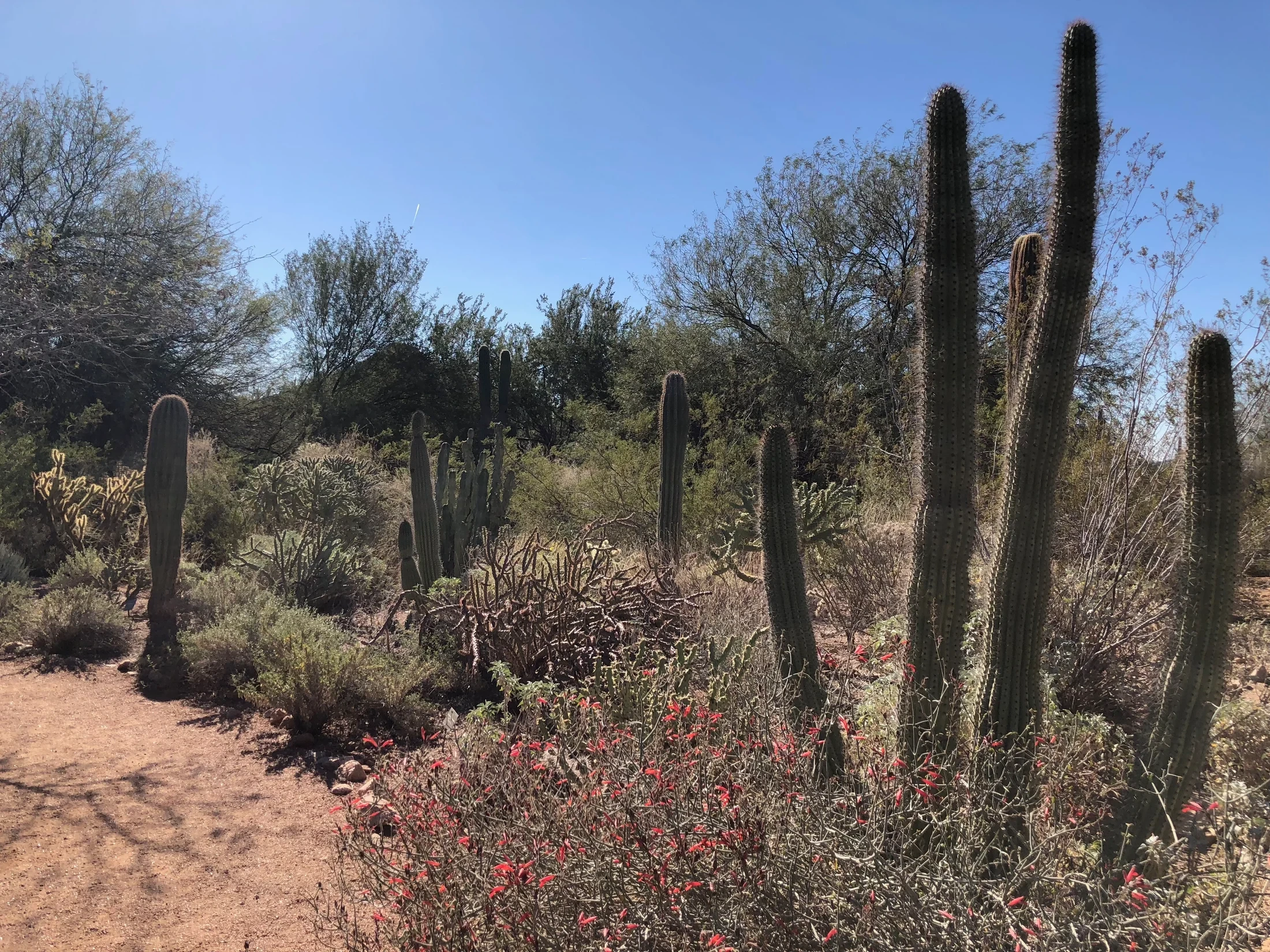
At Desert Botanical Garden in Phoenix, make the plants the reason to stop. A cactus can be a sculptural shape in a photograph, but the Desert Discovery Trail asks you to look at it as a set of solutions to desert life. Follow that thought into the cactus and succulent galleries, then change scale at the Center for Desert Living, where edible and sensory plantings bring the ideas closer to a home garden.
That is a more satisfying starting point than trying to finish every trail. Choose one interpretive route, pause over plants you would otherwise pass, and leave a second area for whatever catches your interest. The Plants and People of the Sonoran Desert Trail offers another direction: the relationship between plants and the people who use them. Behind the visitor displays, the garden's living collections and herbarium support research and conservation. The labels belong to that larger work.
A morning tour can give the visit a useful beginning. From October 15 through November 15, the published Plant Adaptations schedule is daily at 9, 10 and 11 a.m., included with admission and subject to volunteer availability. Ask about that day's tour when you arrive; it is a better plan than building your visit around a bloom you have seen online.
Adult admission starts at $32.95, with the actual price depending on your date and ticket. The garden estimates that most guests spend 90 minutes to two hours, but allow extra time if you want to linger over a collection. Parking is free. Check the calendar and visitor notices before an evening visit, since special events can change access and closing arrangements.
The important tradeoff is exposure: this is an outdoor desert garden, even when your pace is gentle. Bring water and sun protection, and choose your route and time accordingly. The reason to slow down here is the amount there is to notice, not a promise that every path is shaded.
- Suggested shape: an early interpretive walk, a volunteer tour if available, then one collection chosen for curiosity.
- Choose it for: desert plant knowledge and forms; budget using the actual ticket for your date.
Sources: Desert Botanical Garden: visit · Desert Botanical Garden: explore the garden · Desert Botanical Garden: tours · Desert Botanical Garden: visitor questions · Desert Botanical Garden: living collections · Photograph license: CC BY-SA 4.0
2. RoHoEn: give a small garden your full attention
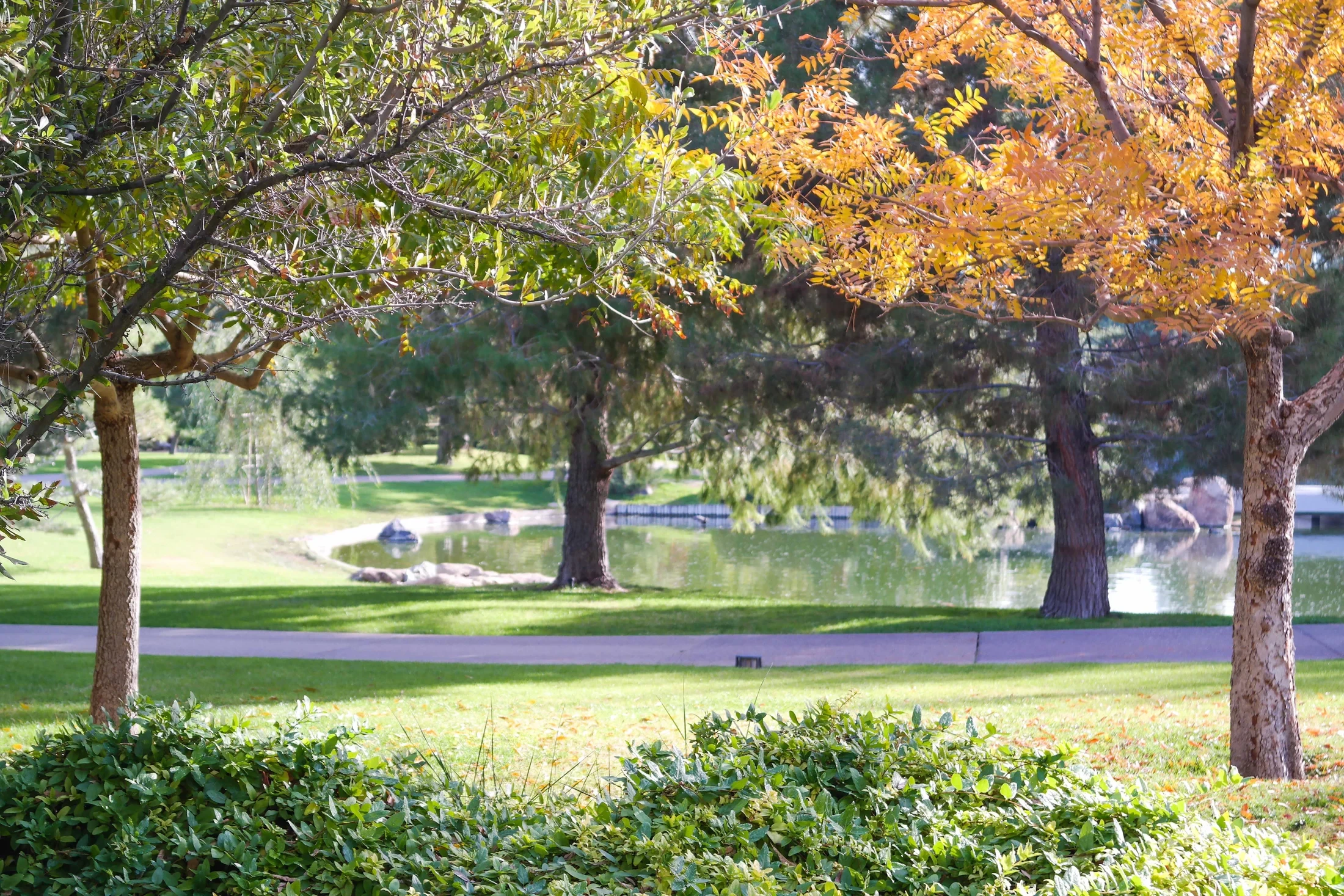
Phoenix's Japanese Friendship Garden, RoHoEn, offers a different kind of plant outing. Its origin in the city's relationship with Himeji matters: Japanese designers helped shape the landscape, bringing together planting, stone and water as parts of a composed garden. Approach it as a place to look at relationships between those elements, rather than as a checklist of individual specimens.
The garden's own estimate of 45 minutes to an hour gives you a workable starting point for a city day. Our suggestion is to walk once without trying to photograph everything, then return to a spot where the view changes as you move. A compact visit can still feel complete when you leave time to observe. That is an itinerary choice, not a guarantee of silence or an empty garden.
For more context, the September–June garden-tour schedule lists Tuesday, Wednesday, Friday, Saturday and Sunday departures at 9:30 and 11 a.m. Tours last about 45–60 minutes, are included with admission and take the first ten participants. Notice the missing Thursday before making the tour your reason to arrive. Tea programs and special events need their own arrangements; ordinary admission should not be read as a tea-ceremony booking.
Current fall hours, covering September through January, are Tuesday–Sunday, 9 a.m.–6 p.m., with last admission at 5:30 p.m. The garden closes Mondays. General adult admission is $14 and the west-side parking lot is free.
Plan the surrounding day with the garden's rules in mind. Food stays outside, water is allowed, and there is no luggage storage. Have a picnic in neighboring Hance Park instead of arriving with lunch and expecting to eat beside the pond. Stay on the paths and leave the stones and lawns as part of the composition. Koi feeding is no longer offered, so don't promise that activity to a child on the way.
- Suggested shape: a garden tour on a listed day, followed by a second, self-paced look.
- Choose it for: garden design and a contained Phoenix outing; handle lunch and luggage separately.

Sources: Japanese Friendship Garden of Phoenix: visit · Japanese Friendship Garden of Phoenix: history · Japanese Friendship Garden of Phoenix: visitor questions · Japanese Friendship Garden of Phoenix: garden guidelines · Japanese Friendship Garden of Phoenix: garden tours · Photograph license: CC BY-SA 3.0
3. Boyce Thompson Arboretum: choose a route through a much bigger collection
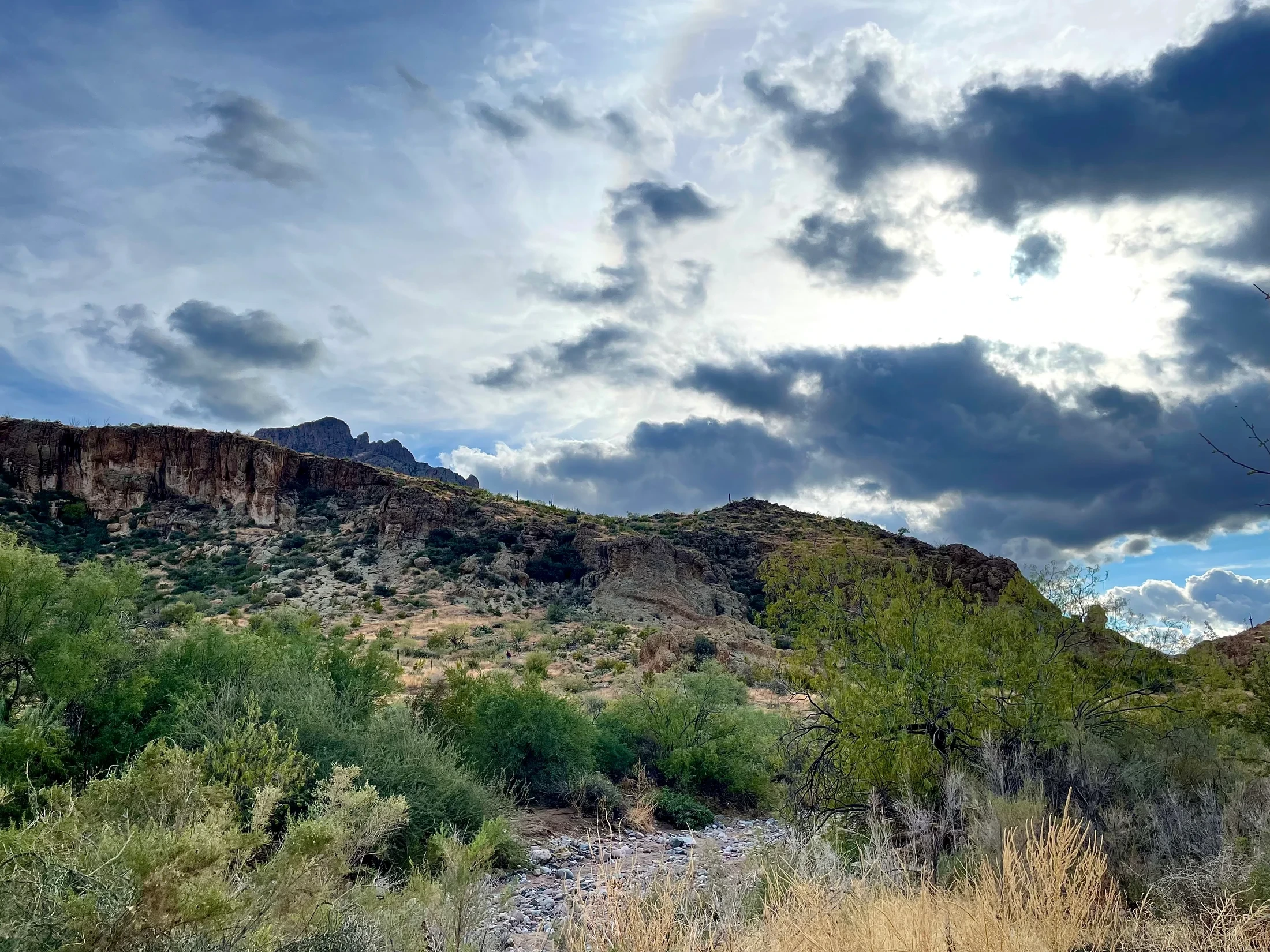
Near Superior, Boyce Thompson Arboretum invites a wider-ranging walk. Australian trees, South American dryland plants, cactus collections and demonstration gardens put different responses to arid conditions beside one another. You can follow a geographic interest, compare plant shapes, or use the demonstration areas to think about what might work in a garden at home.
The Wallace Desert Garden adds a remarkable collection story. Its plants were moved from Scottsdale to keep the collection together, and its 13 acres include regional plant groupings. It is a reason to choose a particular part of the arboretum rather than treating the whole property as one continuous route to finish. Ask for the current map and decide which collection matters most to your group.
That decision also changes the physical outing. The mapped trail network totals 4.7 miles, but that is not a mandatory walking distance. The arboretum describes Thompson Trail as mostly wheelchair accessible; narrower side routes and the steep High Trail are different propositions. Wallace's main trail has its own accessible designation. For a slower day, build the route around those main paths and ask staff about surfaces, grades and the distance to your chosen collection. A short line on a map is not enough information.
October–March hours are 8 a.m.–5 p.m., with last admission at 4 p.m. General admission is $24.95 for adults and visitors ages 13–17. Arriving near opening gives you room to explore and still stop for lunch elsewhere without trying to compress the collection into the final hour.
An optional cart tour runs on Thursdays from 9:30–10:30 a.m. during the published October 2026–April 2027 season. It costs $20 in addition to admission, accommodates five guests and is best arranged ahead. Ask about suitability for your particular mobility needs before booking. The cart is an option for seeing the collection, not evidence that every route is easy or that transfers will work for everyone.
- Suggested shape: select a collection first, then choose a manageable route to it with the entrance map.
- Choose it for: a substantial botanical outing near Superior; leave the High Trail out of an easy-walk plan.

Sources: Boyce Thompson Arboretum: visit · Boyce Thompson Arboretum: gardens · Boyce Thompson Arboretum: Wallace Desert Garden · Boyce Thompson Arboretum: map and routes · Boyce Thompson Arboretum: tours · Photograph license: CC BY-SA 4.0
4. Tucson Botanical Gardens: explore a garden that still feels connected to a home
Tucson Botanical Gardens rewards looking at the spaces between the plants. On the former Porter family property, patios and mature trees preserve the feeling of a domestic landscape that grew into something much larger. It is an appealing choice if your interest runs toward garden rooms, everyday planting ideas and the ways a garden can carry local history.
Begin with the Porter-era spaces, then compare the Barrio Garden and Frida Garden. The first draws on Mexican American neighborhood gardening; the second makes blue walls part of the planting's visual setting. Those are different ways of understanding a garden, and noticing the distinction is more interesting than treating every colorful corner as a photo backdrop. The Great Garden Express offers another close-looking exercise, with miniature structures made using materials such as bark, acorns and seedpods.
Butterfly Magic can be the visit's fixed point. The operator lists it as included with garden admission from October 1 through May 31, with daily hours of 9:30 a.m.–3 p.m. That window is shorter than the garden's day, so see it first if you are arriving in the afternoon. Leave time afterward for the outdoor areas rather than making the greenhouse the entire outing.
The current garden schedule is daily 8:30 a.m.–4:30 p.m., with gates closing at 4:15. General adult admission is $20. Check the live visitor page when planning: older search listings can carry different hours and prices. Grant Road construction near Alvernon may affect your approach.
If garden design is the day's theme, neighboring Yume Japanese Gardens is an optional second stop. A $25 adult combination ticket covers both, but Yume operates Tuesday–Sunday, 9:30 a.m.–3 p.m., and closes Mondays. Its courtyard-garden forms and folk art deserve their own time. Choose that addition because it interests you; there is no need to turn a satisfying single-garden visit into a race to use every ticket option.
- Suggested shape: Butterfly Magic during its opening window, then patios and two themed gardens.
- Choose it for: domestic garden history and varied small spaces; add Yume only if its hours fit.
Sources: Tucson Botanical Gardens: plan your visit · Tucson Botanical Gardens: gardens and map · Tucson Botanical Gardens: visitor questions · Tucson Botanical Gardens: history · Tucson Botanical Gardens: Yume Japanese Gardens
5. Tohono Chul: connect the plants, the art and the season
Tohono Chul makes a strong Tucson choice when you want a garden visit with several different rhythms. Walk through desert planting, stop with an interpretive display, then spend time with regional art in the Exhibit House, a former adobe home dating to 1937. The shift between plants and artwork gives the outing variety without requiring another drive.
The Sonoran Seasons Garden offers a particularly useful idea to take away. Its interpretation uses five seasons, separating the dry and wet parts of summer rather than squeezing the desert into a conventional four-season picture. Look for what the plants are doing during your visit, then consider how the same place would change with a different part of that cycle. It makes a reason to return that does not depend on a promised mass bloom.
There are short routes to choose from. South Loop is about one-fifth of a mile with a gentle incline. Saguaro Discovery is under a quarter mile on a gently sloping gravel hill and includes interpretive work by Tohono O'odham artist Michael Chiago. The art adds a specific cultural voice to the plant interpretation; it is worth allowing reading time rather than judging the stop only by distance.
For a ready-made beginning, Discovering Tohono Chul tours are listed daily at 9 and 10 a.m. from September through May, included with admission. Follow a tour with the galleries or a garden area you want to revisit. Grounds are open daily 8 a.m.–5 p.m.; galleries open at 9. General adult admission is $20.
Lunch can stay on site, but check the Garden Bistro's separate arrangements. Its dedicated page lists 9 a.m.–4 p.m.; parties smaller than six use walk-in or same-day waitlist arrangements, while larger groups should call. Garden admission is not required just to visit the bistro, shops or nursery. That distinction lets local visitors separate a meal or plant-shopping stop from a full garden day, and helps travelers budget for the experience they actually want.
- Suggested shape: a morning tour, one short interpretive route and time in the galleries.
- Choose it for: Sonoran Desert context with art and an optional meal; check route surfaces for your needs.
Sources: Tohono Chul: plan your visit · Tohono Chul: gardens · Tohono Chul: trails · Tohono Chul: tours · Tohono Chul: Garden Bistro · Tohono Chul: current exhibitions
6. The Arboretum at Flagstaff: a forest garden with a firm seasonal limit
The Arboretum at Flagstaff belongs to a different Arizona landscape: a 7,150-foot setting in ponderosa forest, with a mission centered on the Colorado Plateau. Founded by Frances McAllister in 1981, it is a place to think about growing conditions at elevation and the plants that belong to them. The contrast with Phoenix and Tucson is the point of including it here, not a suggestion to drive between all six gardens in one trip.
Start at the visitor center in historic Reichardt House and ask which garden areas make sense that day. Let the visit follow the plants and conditions you actually find. The institution's conservation work includes seed banking and rare plants, giving the collection a purpose beyond display; that research does not mean work areas are open for a casual tour.
For autumn 2026, the calendar is decisive. The regular season ends October 25. Normal opening is Wednesday–Sunday, 9 a.m.–4 p.m., with last admission at 3:15 p.m.; general adult admission is $14. October 24 is an exception, with the property closed until its 3:30 p.m. special event. Check that event's ticket arrangements if it is your intended date. A winter trip to Flagstaff should not assume this garden will be open.
The approach includes an unpaved section of Woody Mountain Road that the operator warns can be rough. Within the grounds, natural surfaces, grades and narrower garden areas also matter. Request the accessible-route map and discuss your needs before setting out. Check the operator's current access and smoke notices as well as the day's conditions, rather than relying on an old photograph.
This is a seasonal garden, not a fixed-date flower or foliage show. The special wildflower walks listed for 2026 have already finished. Choose it while the regular season is still open because you want the forest setting and high-elevation plant collection, and allow the actual state of the garden to shape the visit.
- Suggested shape: visitor-center advice followed by a route suited to that day's grounds and your group.
- Choose it for: Colorado Plateau plants and a forest setting; verify seasonal opening before making the drive.
Sources: The Arboretum at Flagstaff: hours, admission and directions · The Arboretum at Flagstaff: history and mission · The Arboretum at Flagstaff · The Arboretum at Flagstaff: conservation projects · The Arboretum at Flagstaff: wildflower walks
Make one garden the main event
The most useful choice is the one that matches your day. In Phoenix, Desert Botanical Garden offers a larger learning-focused plant visit, while RoHoEn suits a more contained look at landscape design. Near Superior, Boyce Thompson gives you a collection broad enough to plan around a particular region or trail. In Tucson, choose between the intimate garden spaces at Tucson Botanical Gardens and Tohono Chul's combination of desert interpretation, art and a possible meal. Flagstaff is the seasonal forest option.
Pick an anchor, then leave the rest flexible. That anchor might be a tour, the butterfly greenhouse, a particular collection or an art stop. Check its hours before buying admission. A garden's closing time does not necessarily describe the last tour, greenhouse entry or restaurant service, and a standard ticket may not cover an evening event.
For wheelchair users, people managing fatigue, or anyone traveling with a stroller, ask about the route you want to take: its surface, slopes, distance and places to pause. An operator's broad accessibility description is a starting point, not a substitute for those details. For everyone, weather and season matter more than the green color of a promotional photograph.
Use AwayWeek's Arizona travel hub to keep the wider trip in view. If a town-focused weekend appeals more than a garden day, our seven Arizona towns guide compares a different set of outings, including Superior. You do not have to combine both kinds of trip. Choosing one place carefully, and giving it time, is a complete plan.
Sources: Desert Botanical Garden: visit · Japanese Friendship Garden of Phoenix: visit · Boyce Thompson Arboretum: map and routes · Tucson Botanical Gardens: plan your visit · Tohono Chul: plan your visit · The Arboretum at Flagstaff: hours, admission and directions
The details
A few good questions.
Can I visit these gardens without taking a long hike?
Yes, you can choose shorter visits and selected routes rather than complete trail networks. Surfaces and slopes vary: Boyce Thompson distinguishes its mostly accessible main route from the steep High Trail, and Flagstaff has natural surfaces and grades. Ask the operator about the route that fits your needs.
Are all six gardens open throughout the year?
No. The Arboretum at Flagstaff's regular 2026 season ends October 25, and October 24 has special-event arrangements. The other gardens also have seasonal hours, holiday closures or event exceptions. RoHoEn closes Mondays.
Do garden tickets include every tour and experience?
No. Some volunteer garden tours and Tucson's seasonal Butterfly Magic are included with admission, but Boyce Thompson's cart tour costs extra, Yume needs its own or a combined ticket, and special events or tea programs can have separate booking requirements.
Behind the story
Sources & further reading.33 sources behind this story
Research reviewed October 15, 2026. Check the linked providers for updates before travel.
Researched and written with AI, with automated editorial review. Read how we check our stories.
- Desert Botanical Garden: visitChecked 2026-10-15
- Desert Botanical Garden: explore the gardenChecked 2026-10-15
- Desert Botanical Garden: toursChecked 2026-10-15
- Desert Botanical Garden: visitor questionsChecked 2026-10-15
- Desert Botanical Garden: living collectionsChecked 2026-10-15
- Tucson Botanical Gardens: plan your visitChecked 2026-10-15
- Tucson Botanical Gardens: gardens and mapChecked 2026-10-15
- Tucson Botanical Gardens: visitor questionsChecked 2026-10-15
- Tucson Botanical Gardens: historyChecked 2026-10-15
- Tucson Botanical Gardens: Yume Japanese GardensChecked 2026-10-15
- Tohono Chul: plan your visitChecked 2026-10-15
- Tohono Chul: gardensChecked 2026-10-15
- Tohono Chul: trailsChecked 2026-10-15
- Tohono Chul: toursChecked 2026-10-15
- Tohono Chul: Garden BistroChecked 2026-10-15
- Tohono Chul: current exhibitionsChecked 2026-10-15
- Boyce Thompson Arboretum: visitChecked 2026-10-15
- Boyce Thompson Arboretum: gardensChecked 2026-10-15
- Boyce Thompson Arboretum: Wallace Desert GardenChecked 2026-10-15
- Boyce Thompson Arboretum: map and routesChecked 2026-10-15
- Boyce Thompson Arboretum: toursChecked 2026-10-15
- Japanese Friendship Garden of Phoenix: visitChecked 2026-10-15
- Japanese Friendship Garden of Phoenix: historyChecked 2026-10-15
- Japanese Friendship Garden of Phoenix: visitor questionsChecked 2026-10-15
- Japanese Friendship Garden of Phoenix: garden guidelinesChecked 2026-10-15
- Japanese Friendship Garden of Phoenix: garden toursChecked 2026-10-15
- The Arboretum at Flagstaff: hours, admission and directionsChecked 2026-10-15
- The Arboretum at Flagstaff: history and missionChecked 2026-10-15
- The Arboretum at FlagstaffChecked 2026-10-15
- The Arboretum at Flagstaff: conservation projectsChecked 2026-10-15
- The Arboretum at Flagstaff: wildflower walksChecked 2026-10-15
- Photograph license: CC BY-SA 4.0Checked 2026-10-15
- Photograph license: CC BY-SA 3.0Checked 2026-10-15
Your next somewhere.
U.S. travel stories with sources you can follow and places worth making time for.
Our editorial approachExplore destinationsShare a little inspiration