Arizona
Skip Sedona This Weekend: 7 Arizona Towns Worth the Detour
Mine trains, birding gardens, museum afternoons and Route 66: seven Arizona bases with a distinct reason to go, plus the details that make a weekend work.
A good Arizona weekend can begin with a very small ambition: sit beside a bird feeder, ride into a copper mine, or spend an afternoon following a museum’s story instead of a trail. Sedona is one way to build a trip. These seven towns offer seven other starting points, from southern Arizona’s creekside habitat to a railway departure in the northern high country. Choose one base and give it some time. This is a menu of separate weekends, not a route that connects all seven in two days. Each choice below has an anchor activity, a workable way to arrange your visit and a limitation worth knowing before you book. Hours, fees and restrictions were checked on October 14, 2026; use the linked operators for your actual date.
At a glance
- Choose your focus
- Bisbee or Jerome for mining history; Patagonia for birds; Prescott for museums; Cottonwood for town-and-river time; Superior for gardens; Williams for rail travel.
- Book first
- Reserve the Copper Queen Mine tour or a Grand Canyon Railway departure before building the rest of that weekend.
- Sunday matters
- Prescott’s Museum of Indigenous People is closed Sundays; Sharlot Hall Museum opens at noon on Sundays.
- Roadwork watch
- US 60 bridge construction east of Superior affects through-travel and some recreational access. Check the current ADOT alert before leaving.
1. Bisbee: build a weekend around the mine and the streets above it
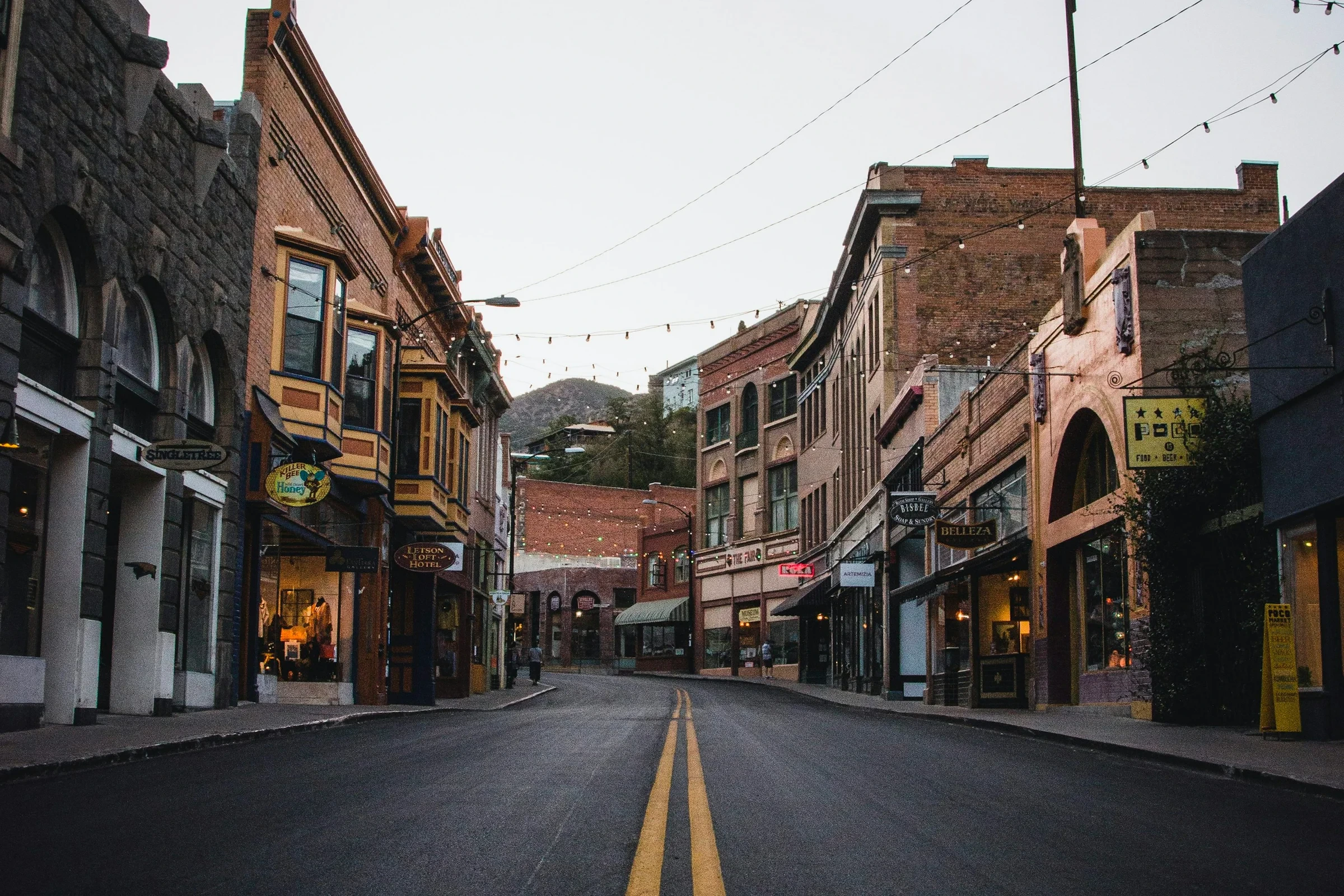
Bisbee gives you two different ways to understand a mining town: descend into the Copper Queen Mine, then walk among the brick storefronts, galleries and hillside streets of Old Bisbee. The change in scale is the appeal. Underground, the visit follows the workings of a specific industry; above ground, a few blocks can turn into an afternoon of looking at buildings, browsing art and deciding where to stop for a meal.
Make the mine tour your fixed appointment. The operator requires reservations and asks visitors to arrive at least 30 minutes early. Checked admission is $18 for adults and $9 for children ages six through 12, including tax; children under six cannot take the underground tour. Closed-toe shoes are required, and high heels are prohibited. Bring a light layer rather than assuming the outdoor temperature describes the mine.
The roughly hour-long experience has physical details that matter: riders straddle a bench on the mine train, one stop involves about 300 feet of walking, and another has 36 stairs. The operator says people may remain on the train at the stair stop, but that does not make every part of the visit accessible. Discuss your needs before reserving.
For a second anchor, the Bisbee Mining & Historical Museum at Copper Queen Plaza lists daily hours of 10 a.m.–4 p.m. and $12 general admission. Put it on the other day, leaving room for the streets instead of rushing between two indoor visits. Bisbee’s mines closed in 1975 and the public mine tour opened in 1976: the town’s industrial past is close enough to remain tangible, while its art and everyday businesses give you a reason to linger.
- Weekend shape: reserved mine tour and Old Bisbee on Saturday; museum and a final browse on Sunday.
- Tradeoff: hills, stairs and the mine’s seating arrangement can require more planning than the short distances suggest.
Sources: Copper Queen Mine Tour — reservations and visitor rules · Copper Queen Mine — what the underground tour involves · Bisbee Mining & Historical Museum — visitor information · Copper Queen Mine — history of the tour · Arizona Office of Tourism — Bisbee
2. Patagonia: leave room for an unhurried morning with birds
Patagonia is a compelling choice when the activity you want most is paying attention. Start at Tucson Bird Alliance’s Paton Center for Hummingbirds, where a pavilion, feeders, meadow and pond give you places to pause. Admission is free and the center is open from dawn to dusk. There is no requirement to turn the visit into a species-counting competition, and no responsible itinerary can promise a particular bird will appear on cue.
Pair that small, welcoming viewing space with The Nature Conservancy’s Patagonia–Sonoita Creek Preserve. The cottonwood-and-willow habitat gives the second stop a different character: you are moving through a creekside landscape rather than staying beside the feeding area. During October through March, the preserve lists Wednesday–Sunday hours of 7:30 a.m.–4 p.m.; it closes Mondays, Tuesdays and specified holidays. General admission is $8, with visitors 17 and younger admitted free.
Those details are worth checking at the source. The town’s preserve listing still showed a lower price during research, so the land manager’s own visitor information is the basis for this guide. There is a one-mile connector between the preserve and Paton, but it includes upland terrain and a viewpoint; do not assume that linking the two on foot means a uniformly flat creek walk.
Give Saturday morning to the preserve, return to town for food, and leave Sunday flexible for Paton or a second look at the habitat. The preserve does not allow picnicking, swimming or wading, and pets are prohibited except service animals. Plan your meal outside the preserve and choose this weekend for its patient pace, not for a packed succession of attractions.
- Weekend shape: preserve first on Saturday; Paton on either morning, with time to sit.
- Tradeoff: a Monday extension changes the plan because the preserve is closed, even though Paton remains a dawn-to-dusk option.
Sources: Paton Center for Hummingbirds — Tucson Bird Alliance · Tucson Bird Alliance — locations and opening · The Nature Conservancy — Patagonia-Sonoita Creek Preserve · Town of Patagonia — preserve directions and older listing
3. Prescott: make Saturday the museum day
Prescott works especially well for travelers who want the weekend to have a story. Sharlot Hall Museum combines exhibit buildings, historic structures and gardens on a four-acre campus at 415 West Gurley Street. Instead of treating it as a quick object-filled room, leave enough time to move between buildings and notice how the campus itself helps explain the region’s history.
The museum’s published October–April schedule is Tuesday–Saturday, 10 a.m.–4 p.m., and Sunday, noon–4 p.m. General adult admission is $17 and covers two consecutive days. That two-day validity makes a Saturday visit followed by a shorter Sunday return a sensible option if you prefer to absorb a place slowly. The museum closes Mondays; its separate Fort Whipple location has its own schedule and should not be assumed to follow the main campus hours.
The Museum of Indigenous People, at 147 North Arizona Avenue, is another reason to protect Saturday in your plan. It lists Monday–Saturday hours of 10 a.m.–4 p.m., Sunday closure and $10 adult admission. Its visitor guidance identifies an accessible entrance and parking behind the museum and recommends arriving at least an hour before closing. Check directly for the specific access arrangements you need.
One workable approach is to visit the Museum of Indigenous People on Saturday, then use Sunday afternoon for Sharlot Hall and time around downtown. That leaves breathing room for a meal and a walk instead of stacking every museum into one rushed day. Prescott is also covered in our Arizona landscape guide through Watson Lake; this weekend takes a different direction, using the town’s museums as the main event.
- Weekend shape: Museum of Indigenous People on Saturday; Sharlot Hall after noon Sunday, or split Sharlot Hall across both days.
- Tradeoff: arriving late Saturday can eliminate one of the two main museum choices.
Sources: Sharlot Hall Museum — hours and admission · Sharlot Hall Museum — campus and history · Museum of Indigenous People — plan your visit
4. Jerome: look beyond the view to the town that survived
Jerome’s hillside setting makes the first impression, but its museums give that view a framework. Start with Jerome State Historic Park in the Douglas Mansion, a 1916 building that now presents mining history, minerals and a model connecting the town to the workings below it. The park lists daily hours of 9 a.m.–4:30 p.m.; admission is $10 for ages 14 and older and $5 for children seven through 13.
Then give the town itself a separate stretch of time. The Jerome Historical Society’s Mine Museum is a different institution from the state park, and its exhibits include the communities who lived and worked here as well as mining equipment. That emphasis helps keep a visit from becoming only a sequence of picturesque façades. The society also maintains the Audrey Headframe, a surviving piece of the industrial landscape, and describes an Art Park featuring handmade work when weather permits.
There is a preservation story behind the surviving streets. The historical society formed in 1953, and its account describes a 1956 agreement preventing further demolition in the core, followed by sales of buildings for restoration. The town you see is the result of those decisions as well as the mine’s earlier fortunes.
For a weekend, use the state park as one morning’s anchor and leave the rest for galleries, the historical society’s sites and meals. Resist making every stop depend on one parking space or a perfectly level walk: the hillside is part of the place. If steep streets are a poor fit for your group, choose specific entrances and stops in advance rather than assuming a compact map means an effortless circuit.
- Weekend shape: Douglas Mansion first, then a slower town visit; add Cottonwood on the other day if you want a nearby change of pace.
- Tradeoff: beautiful hillside views come with slopes, and separate museums have separate visitor arrangements.
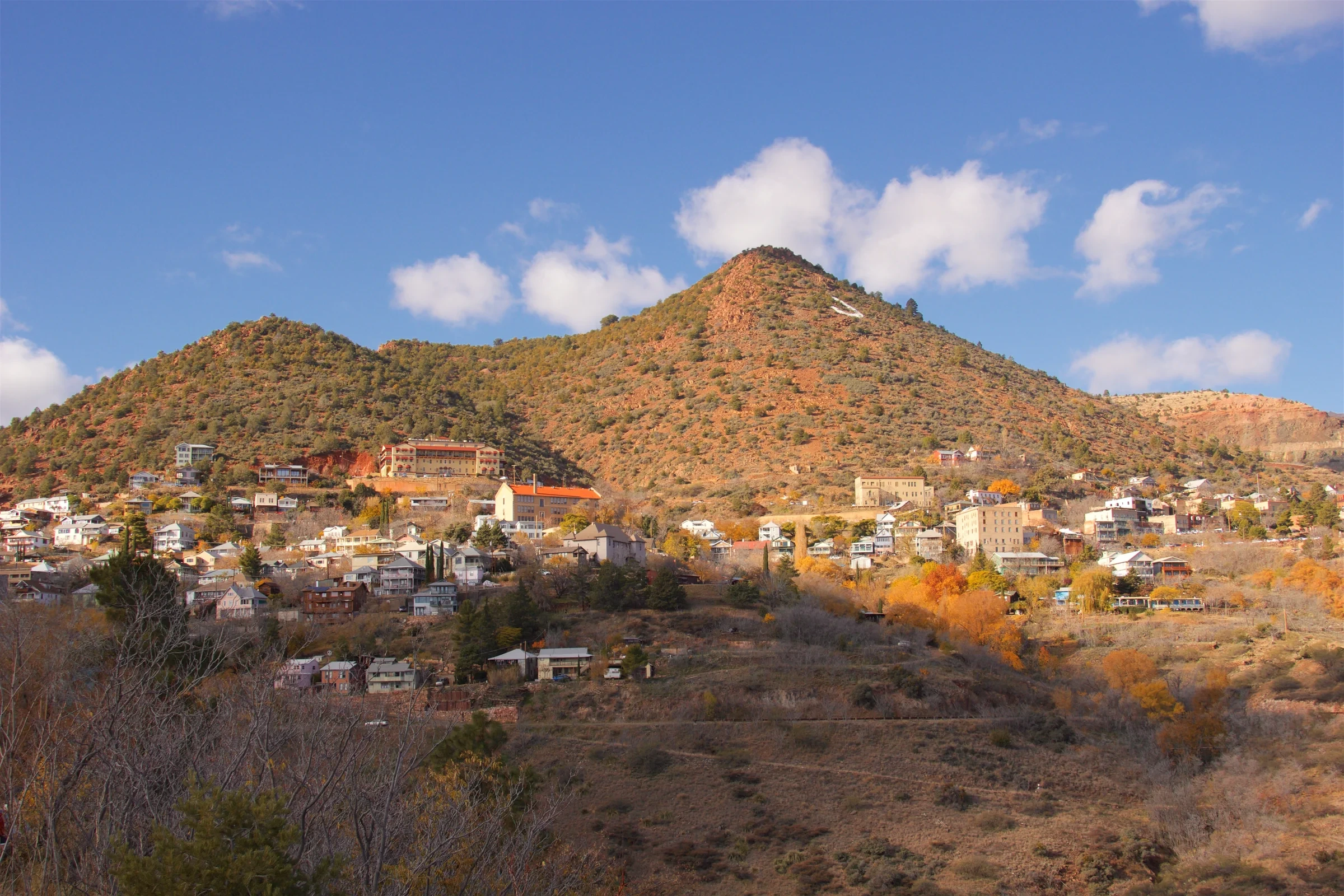

Sources: Jerome State Historic Park — Douglas Mansion · Jerome Historical Society — museums and buildings · Jerome Historical Society — preservation history · Jerome photograph — Creative Commons BY-SA 4.0 license
5. Cottonwood: combine Main Street with a deliberately short river walk
Cottonwood offers a useful mix for a group whose ideal weekend includes both browsing and time outdoors. Old Town’s Main Street brings shops, galleries, restaurants and tasting rooms together, while the Verde River landscape gives you a reason to step away from storefronts. You can build a satisfying day without turning it into a long-distance hike or making wine the organizing principle.
At Dead Horse Ranch State Park, choose the actual trail before deciding how much energy the outing requires. Arizona State Parks describes the Canopy Trail as a quarter-mile ADA-accessible loop through cottonwoods in the River Day Use Area. The Forest Loop is half a mile, and individual lagoon loops vary in length. Those are different choices from the park’s longer routes and trails shared with other users; a general promise of an 'easy park walk' would hide useful distinctions.
Budget for the park rather than assuming the river stop is free. The current listing gives a $10 vehicle fee for one occupant and $20 for two to four occupants, with fall/winter day-use hours of 7 a.m.–6 p.m. Check the gate notice for your date, since seasonal closing times matter more than how long a trail looks on a map.
For the other day, nearby Tuzigoot National Monument is in Clarkdale, not downtown Cottonwood. Check in at its visitor center before visiting the pueblo. The National Park Service describes the Pueblo Trail as 0.3 mile and roughly 30–45 minutes, with steep grades that make it unsuitable for wheelchairs. Its separate Marsh Overlook route is listed as an accessible one-mile round trip. Pick the route that fits your group, leave time to read the interpretation, and check current conditions before setting out.
- Weekend shape: Main Street and a chosen short park walk one day; Tuzigoot in Clarkdale on the other.
- Tradeoff: the town, state park and monument are separate stops, with different fees, hours and walking demands.
Sources: Visit Cottonwood — Historic Old Town · Dead Horse Ranch State Park — current access and fees · Dead Horse Ranch — official trail descriptions · Tuzigoot National Monument — plan your visit · Tuzigoot — current conditions
6. Superior: spend the morning in the gardens, then head into town
Superior makes a strong case for a weekend built around plants, desert scenery and a manageable town stop. Boyce Thompson Arboretum, outside town near Picketpost Mountain, brings desert plants from different parts of the world into one landscape. Its Wallace Desert Garden alone spans 13 acres with 1.5 miles of trails, so arriving with time to wander is more useful than treating the entrance as a roadside photo stop.
For October through March, the arboretum publishes daily hours of 8 a.m.–5 p.m., with final admission at 4 p.m. General admission is $24.95 for ages 13 and older, $10 for ages five through 12, and free for children under five. Classes and special activities may have their own arrangements. Choose the routes that interest you, stay on designated paths and leave enough of the afternoon for Superior’s Main Street, a couple of blocks north of US 60.
Roadwork is the planning detail that deserves special attention here. ADOT is replacing bridges just east of Superior, and the town’s visitor information says its businesses remain open. That does not mean through-travel is unaffected. At this check, ADOT announced a closure of US 60 between Superior and Miami on Thursday, October 15, from 9 a.m.–2 p.m., with a further closure tentatively scheduled for October 20. Consult the live project alert and AZ511 for your travel day rather than treating those dates as a permanent schedule.
Also leave the affected LOST Trail segment out of the itinerary: ADOT says the route through the construction site is closed from the Magma Avenue Trailhead toward the historic Claypool Tunnel. The Waterfall Canyon pull-out east of the Queen Creek tunnel is closed during reconstruction, too. The gardens-and-town plan stands on its own without adding a closed trail or construction-area viewpoint.
- Weekend shape: arboretum at the start of the day, followed by Main Street and a meal; keep the next day flexible rather than filling it with unverified trails.
- Tradeoff: a route continuing east toward Miami or Globe needs a fresh roadwork check.
Sources: Boyce Thompson Arboretum — plan a visit · Boyce Thompson Arboretum — gardens and conservation · Town of Superior — visitor guide and road notice · Arizona Office of Tourism — Superior · ADOT — Queen Creek and Waterfall Canyon Bridges project and current alert
7. Williams: decide whether this is a train weekend or a Route 66 weekend
Williams gives a northern Arizona getaway a recognizable rhythm: Route 66 signs and diners in town, then the option of a full day aboard the Grand Canyon Railway. The train is the experience, so judge it by whether you want that journey rather than assuming it is the quickest way to reach the canyon. Its published route covers 65 miles in about two hours and 15 minutes each way.
Through October, the regular schedule leaves Williams at 9:30 a.m., reaches the South Rim at 11:45 a.m., departs the canyon at 3:30 p.m. and returns to Williams at 5:45 p.m. That provides more than three hours at the rim but also occupies most of a day. In November and December the regular timetable shifts an hour earlier, with no regular Christmas Day service. Extra departures and special services follow their own schedules, and a railway photograph is no guarantee of a steam locomotive on your date.
Choose your travel day and car before arranging the rest of the weekend. For passengers using wheelchairs or scooters, the railway identifies designated spaces and accessible restrooms in Coach and First Class, with lift boarding for accessible cars. Dome areas require stairs. Confirm the specific car, equipment dimensions and boarding arrangements before purchasing rather than treating all seating classes as interchangeable.
If the railway is the main reason to go, spend the preceding afternoon exploring Williams and keep the following evening uncomplicated. If you would rather browse Route 66 and linger over meals, let that be the trip; a train ticket is not a prerequisite for enjoying the town. Either version benefits from leaving room in the schedule instead of attempting a separate major excursion after the return train.
- Weekend shape: arrive and explore town on one day; reserve the next for the railway if it is your chosen anchor.
- Tradeoff: the train commits a full day and a fixed return time; book the date and car that fit your group.
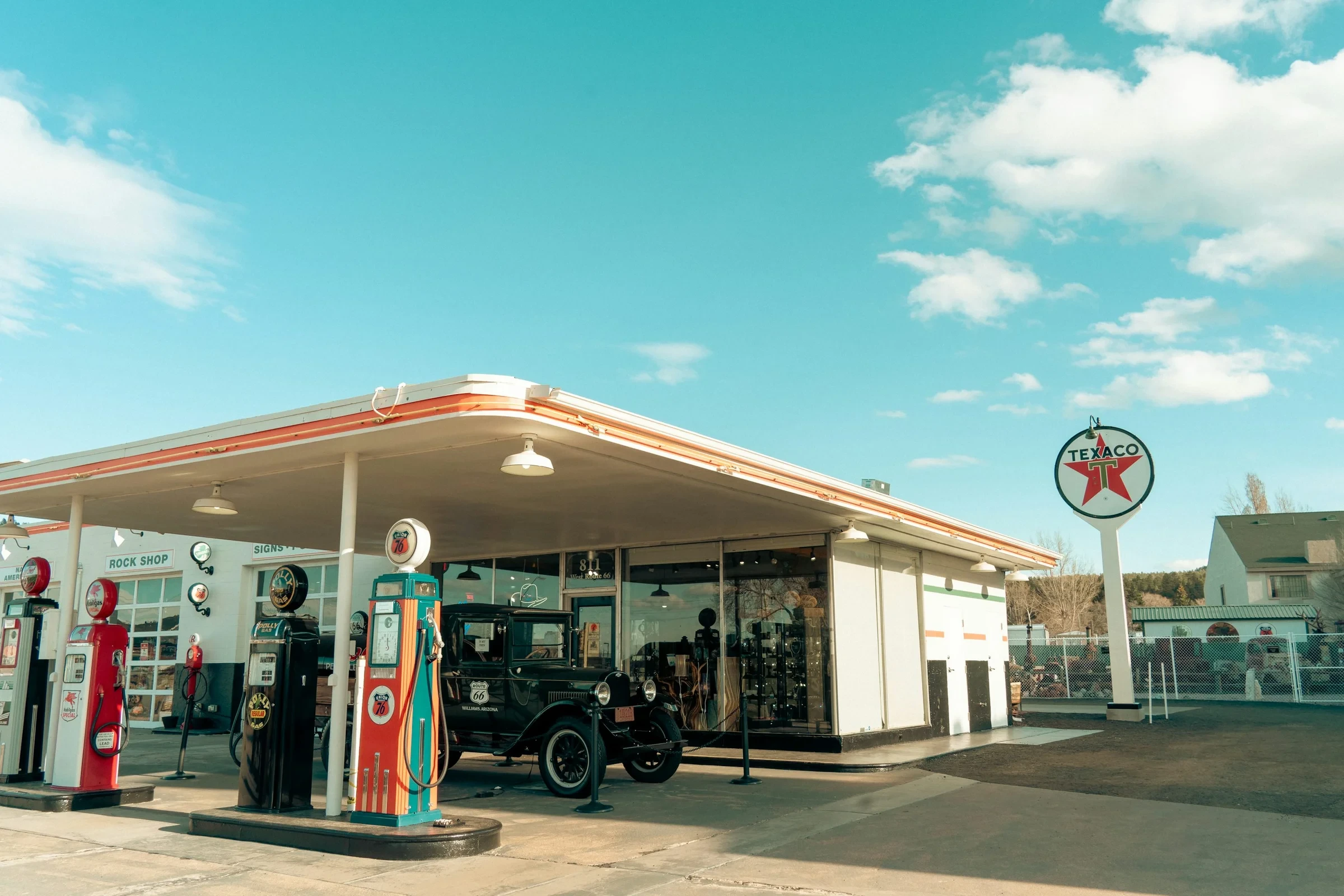
Sources: Arizona Office of Tourism — Williams · Grand Canyon Railway — train schedule and route · Grand Canyon Railway — accessibility · Grand Canyon Railway — Williams service overview
The details
A few good questions.
Can I visit all seven towns in one weekend?
Choose one base. The southern towns, central Arizona choices and northern Williams are separate trip ideas. Jerome and Cottonwood are a practical pairing, but adding every town would turn the weekend into a statewide driving itinerary.
Which choices have useful options for limited walking?
Consider seated birdwatching at Paton, the quarter-mile Canopy Trail at Dead Horse Ranch, or museum visits planned around specific entrances. Confirm current surfaces, facilities and your equipment needs with each operator. Short routes such as Tuzigoot’s Pueblo Trail can still be steep, and Bisbee’s mine train has a particular seating arrangement.
Are these towns cheaper or less crowded than Sedona?
This guide makes neither claim. Accommodation prices, events and visitor numbers vary by date. Choose the activity and town you want, then compare actual lodging, admission and transport costs for that weekend.
Behind the story
Sources & further reading.30 sources behind this story
Research reviewed October 14, 2026. Check the linked providers for updates before travel.
Researched and written with AI, with automated editorial review. Read how we check our stories.
- Copper Queen Mine Tour — reservations and visitor rulesChecked 2026-10-14
- Copper Queen Mine — history of the tourChecked 2026-10-14
- Copper Queen Mine — what the underground tour involvesChecked 2026-10-14
- Bisbee Mining & Historical Museum — visitor informationChecked 2026-10-14
- Arizona Office of Tourism — BisbeeChecked 2026-10-14
- Paton Center for Hummingbirds — Tucson Bird AllianceChecked 2026-10-14
- Tucson Bird Alliance — locations and openingChecked 2026-10-14
- The Nature Conservancy — Patagonia-Sonoita Creek PreserveChecked 2026-10-14
- Town of Patagonia — preserve directions and older listingChecked 2026-10-14
- Sharlot Hall Museum — hours and admissionChecked 2026-10-14
- Sharlot Hall Museum — campus and historyChecked 2026-10-14
- Jerome State Historic Park — Douglas MansionChecked 2026-10-14
- Visit Cottonwood — Historic Old TownChecked 2026-10-14
- Museum of Indigenous People — plan your visitChecked 2026-10-14
- Jerome Historical Society — museums and buildingsChecked 2026-10-14
- Jerome Historical Society — preservation historyChecked 2026-10-14
- Tuzigoot National Monument — plan your visitChecked 2026-10-14
- Dead Horse Ranch State Park — current access and feesChecked 2026-10-14
- Dead Horse Ranch — official trail descriptionsChecked 2026-10-14
- Boyce Thompson Arboretum — plan a visitChecked 2026-10-14
- Town of Superior — visitor guide and road noticeChecked 2026-10-14
- Grand Canyon Railway — Williams service overviewChecked 2026-10-14
- Tuzigoot — current conditionsChecked 2026-10-14
- Grand Canyon Railway — train schedule and routeChecked 2026-10-14
- Grand Canyon Railway — accessibilityChecked 2026-10-14
- Arizona Office of Tourism — WilliamsChecked 2026-10-14
- Arizona Office of Tourism — SuperiorChecked 2026-10-14
- ADOT — Queen Creek and Waterfall Canyon Bridges project and current alertChecked 2026-10-14
- Boyce Thompson Arboretum — gardens and conservationChecked 2026-10-14
- Jerome photograph — Creative Commons BY-SA 4.0 licenseChecked 2026-10-14
Your next somewhere.
U.S. travel stories with sources you can follow and places worth making time for.
Our editorial approachExplore destinationsShare a little inspiration