Yuma, Arizona
Yuma Beyond the Winter Escape: A Day Along the Colorado River
Follow the Colorado River through restored wetlands and a historic crossing, then choose the museum that fits your day. This Yuma plan makes room for shade, lunch and a shorter walk.
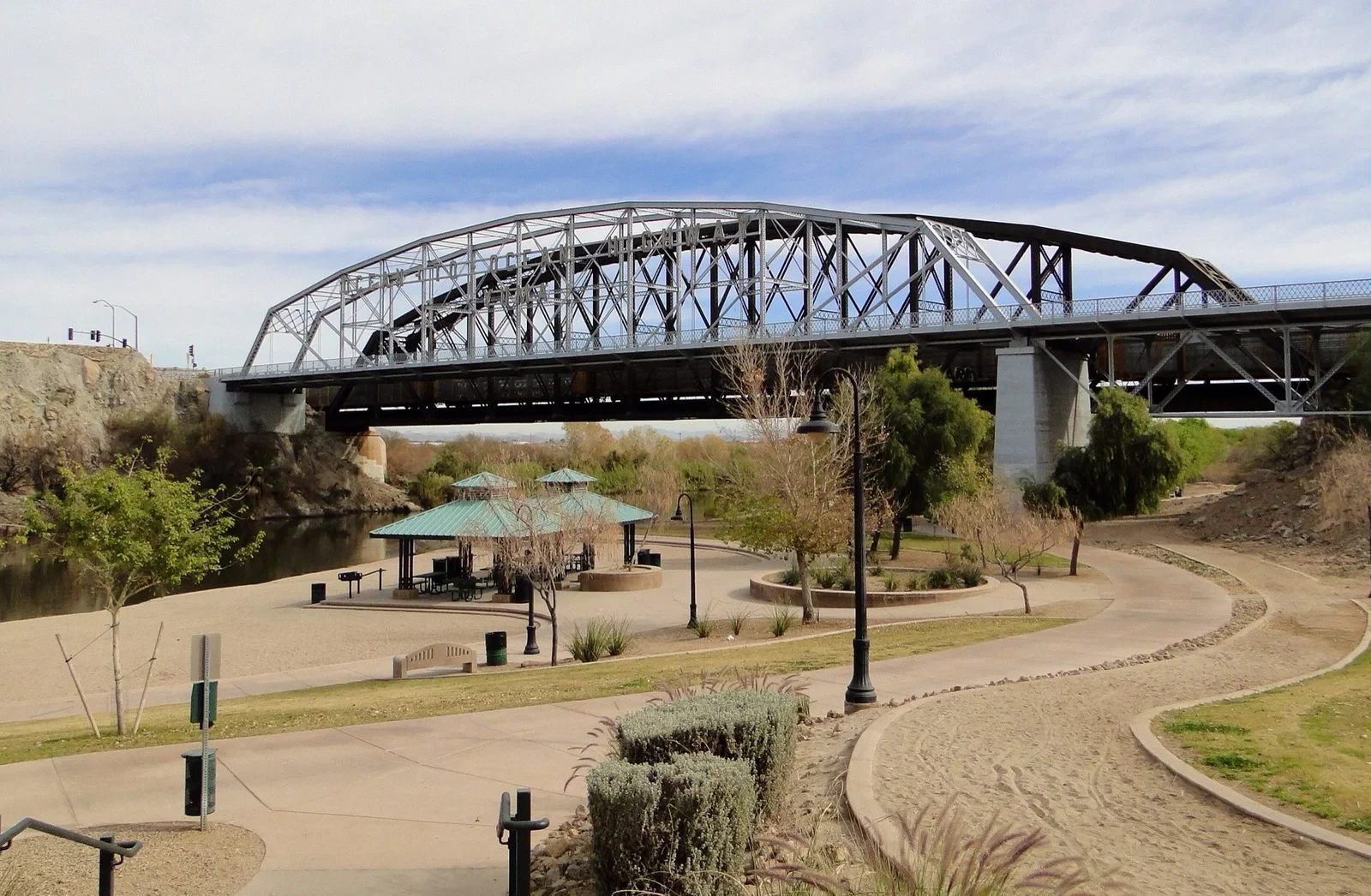

A steel bridge, a patch of riverbank forest and an old Army depot tell three different stories about Yuma. The bridge marks a place people needed to cross. The depot explains how goods moved through the Southwest. The wetlands show the work involved in bringing native habitat back to a river whose flow has been profoundly changed. You can connect those stories in one day without making the entire riverfront a hiking assignment. Start with an outdoor walk, spend the middle of the day around downtown and a historic park, and keep a second museum or an extra park visit optional. This is a day in Yuma for someone already staying nearby or adding a stop to a longer journey—not a promise of an easy round trip from every Arizona city. Visitor information was checked October 21, 2026. The most consequential scheduling detail is simple: Colorado River State Historic Park closes on Mondays in the cooler season and on Monday through Wednesday in summer. The Territorial Prison follows a different schedule.
At a glance
- Base
- Yuma, Arizona; a day in the city, not a statewide day-trip radius.
- Core plan
- One wetlands walk, the historic crossing, downtown lunch and one museum.
- Museum budget
- Listed adult admission: $10 each at the river park and prison; $20 for both.
- Key schedule
- River museum: Tue–Sun Oct–May; Thu–Sun Jun–Sep. Prison: daily, seasonal hours.
Build the day around one walk and one museum
Make the East Wetlands your first substantial outing, then move toward Gateway Park and Pivot Point before a downtown lunch. Give the afternoon to Colorado River State Historic Park if you want the river's transport and irrigation story. Choose Yuma Territorial Prison instead if the surviving cellblock and individual prisoner histories are the main draw. Both can fit on a sufficiently cool, unhurried day, but neither benefits from being squeezed into the final half hour before closing.
Think of this as several connected areas rather than one compact park. East Wetlands, the downtown crossing and West Wetlands have different entrances and different kinds of ground. A car lets you shorten the exposed connecting stretches; a bicycle can suit the riverfront network if you are comfortable sharing routes with other users. Visit Yuma describes paved paths connecting parks and streets, but also primitive paths within the wetlands. A line on the map does not make every branch paved.
For a first visit, allow roughly an hour for a modest wetlands outing, time for the crossing and lunch, and a generous museum block. Those are planning suggestions, not official tour durations. Add distance only after seeing the trailhead map, weather and your group's energy. If you are arriving late in the morning, start with the museum whose closing time matters most and save a short bank-side look for later.
East Wetlands: look at the landscape as a restoration project
The East Wetlands bring marsh, mesquite, cottonwood and willow close to the city. Their appeal goes beyond finding a green patch in the desert: this is a landscape people have actively rebuilt. The heritage area's operator dates restoration work to 2004 and describes nearly 400 acres transformed, through a partnership that includes the Quechan Indian Tribe, City of Yuma and Arizona Game and Fish Department.
Begin at the Riverside Park area near 50 Prison Hill Road, the trailhead identified in the heritage operator's published walking guide. That guide describes a 3.5-mile outing, but you do not have to complete it to appreciate the setting. Read the map on arrival and choose a shorter out-and-back if that better fits your day. It is easier to enjoy a patch of willows when you have left time to pause than when you are trying to finish a loop before a museum closes.
Watch for the transitions between planted woodland, marsh and more open ground. Habitat restoration here involves more than planting trees once and walking away. The operator describes continuing management, while a landscape research case study documents irrigation and work to overcome saline soils in the early phases. Treat the vegetation as evidence of stewardship, not untouched wilderness.
Stay on designated routes, keep distance from wildlife and leave plants where they grow. Bring your own drinking water and sun protection, and decide your turnaround before the walk becomes a test of endurance. Birds are part of the reason to linger, but a species list is not a promise that a particular bird will appear during your visit.
The river's story includes people who are still shaping it
Yuma's crossing mattered long before railroads and Army warehouses. Granite outcrops narrowed the Colorado here, making this a strategic passage in a much wider river landscape. The National Park Service's history describes the ancestors of today's Quechan and Cocopah communities along the river and the Quechan role in controlling the crossing. Reading that history changes the meaning of an apparently simple waterfront stroll.
The Quechan connection belongs in the present tense, too. In 2025, the tribe republished reporting about its native-plant restoration, the cultural uses of willow, mesquite and cottonwood, and the relationship between a living river and community life. That work is part of a broader regional effort, alongside the tribe's participation in the East Wetlands partnership.
Local reporting from KAWC in March 2026 describes another restoration project on the Cocopah North Reservation. It also mentions an eventual pedestrian connection toward West Wetlands. That is a future plan in the report, so it is not an extra walk in this itinerary. Nor should a description of restoration on tribal land be read as an invitation to enter a worksite or reservation location without checking access.
Carry that distinction into the museum visit. The story of the crossing includes trade, migration, military control, displacement and decisions about water. It is more interesting—and more faithful to the place—when those perspectives remain visible alongside the trains and stone walls.
Gateway and Pivot Point: make a short stop count
Gateway Park puts you close to the river at the downtown end of Madison Avenue. The city lists picnic ramadas, restrooms, a playground and an outdoor shower, with shade beneath the freeway bridge. It makes a useful place to regroup after a walk, especially if some of your party would rather sit and watch the river than add another trail.
Nearby Pivot Point Interpretive Plaza gives the crossing a physical explanation. A concrete pivot survives from the railroad bridge that swung open for passing steamboats. A 1907 Baldwin locomotive helps tell the rail story, while the site marks the arrival of the first train into Arizona in 1877. The locomotive's date and the crossing's date are different; noticing that keeps the display from collapsing a complicated history into one moment.
Spend time with the panels rather than treating the locomotive as the whole attraction. The heritage operator describes interpretation covering ferries, the Quechan, the prison, the depot and irrigation infrastructure. After the wetlands, the plaza is a useful shift in scale: from the living riverbank to the machinery and decisions that connected places far beyond it.
The Ocean to Ocean Bridge is another recognizable feature of the riverfront. Enjoy the view from public paths and park areas without building this day around a bridge crossing. The photographs in this guide are dated archive images, so water levels, foliage and small site details should not be read as a report of conditions today.
Colorado River State Historic Park: follow the freight, then the water
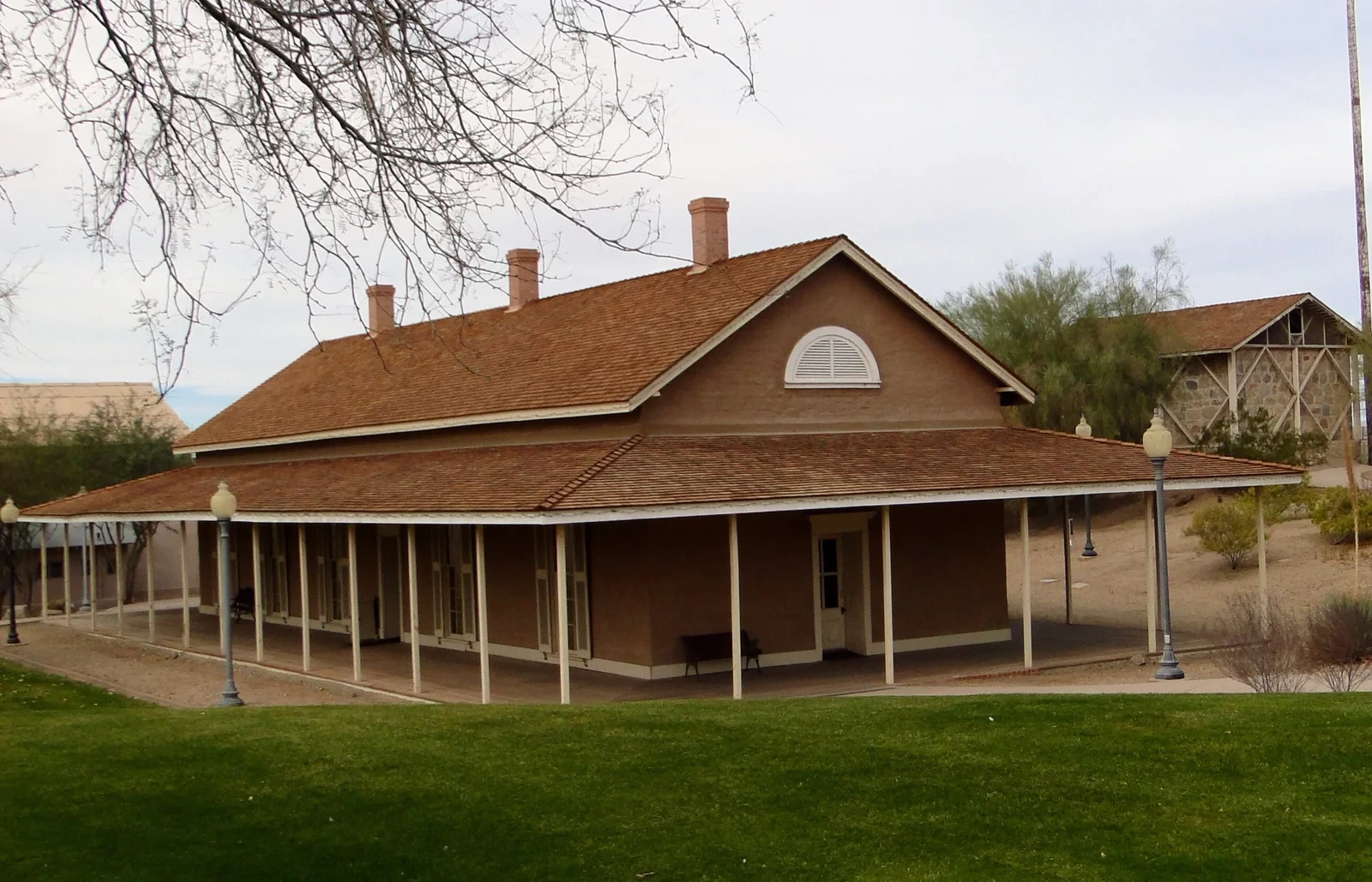
At 201 North 4th Avenue, the former Quartermaster Depot offers the most direct continuation of the river story. Supplies once traveled by sea to the mouth of the Colorado, then upstream by steamboat to Yuma, before going inland by mule wagon to Army posts. The site's history explains why a collection of comparatively modest buildings could matter across such a large region.
The later chapter is irrigation. In 1904 the former depot became headquarters for the Reclamation Service's Yuma Project. The Bureau of Reclamation's historical account traces the construction of Laguna Dam and the California Main Canal, which carried water toward a siphon crossing beneath the Colorado before the system divided into canals on the Arizona side. The scale is easier to grasp after looking at the river itself: the same corridor served as a transport route and as a source of water to be redirected.
The park adopted its current Colorado River name in 2017. Older guides may still call it Yuma Quartermaster Depot State Historic Park; those names refer to the same visitor destination here, not two stops. Older admission descriptions can also be misleading. Use the present operator's visitor page when planning, rather than assuming a historic name or an old free-entry listing still applies.
For October 1 through May 31, the operator lists Tuesday through Sunday opening, with the museum open 9 a.m. to 4:30 p.m. The gift shop stays open until 5 p.m.; that extra half hour is not extra museum time. From June 1 through September 30, the open days narrow to Thursday through Sunday. Admission is listed at $10 for adults, $7 for children ages 7–13, and free for ages six and under. Recheck before travel, particularly around holidays or a change of season.

Choose the prison for surviving spaces and individual stories
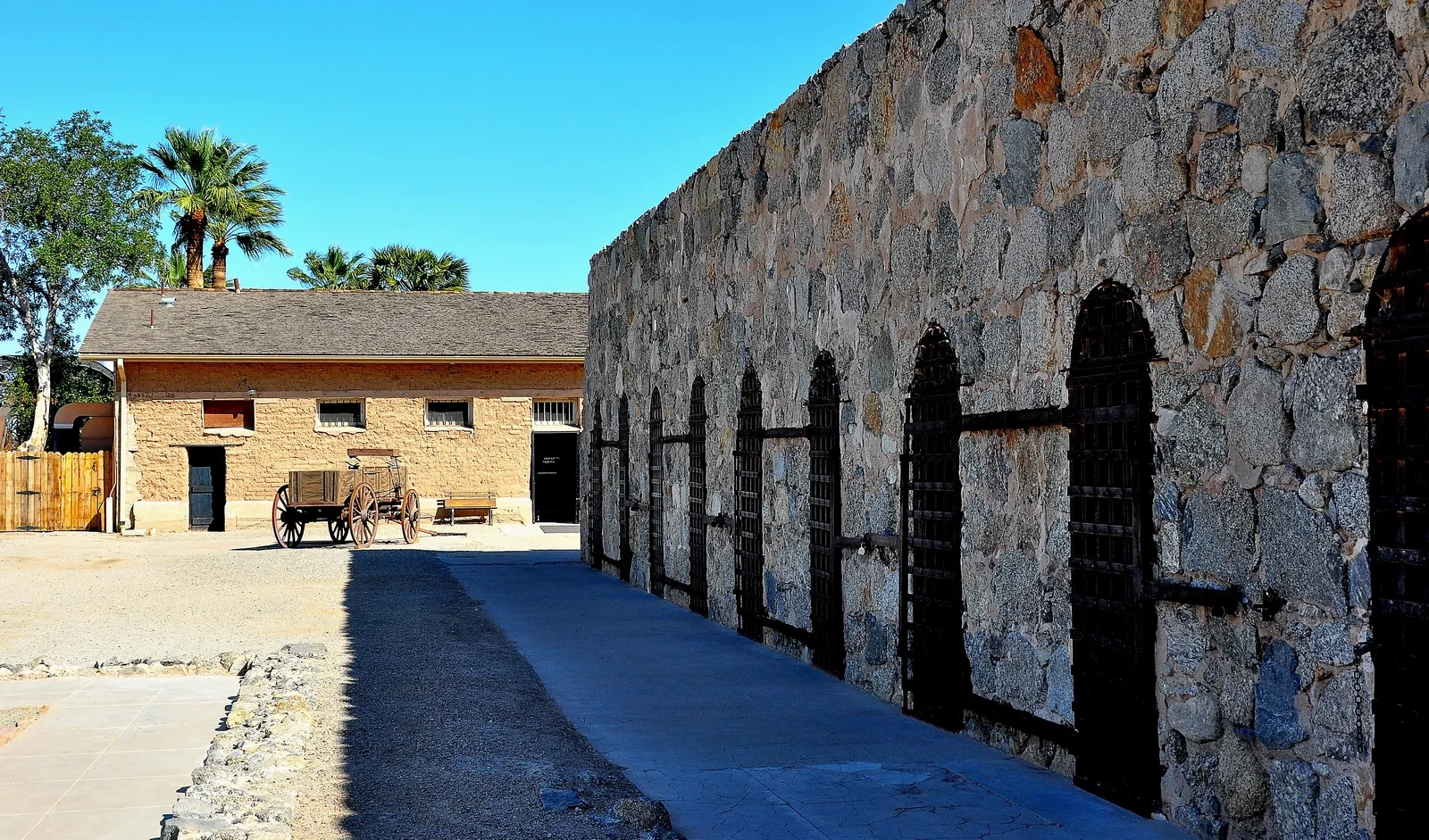
Yuma Territorial Prison, at 220 Prison Hill Road, is the alternative main museum stop. The prison operated from 1876 to 1909, and its surviving spaces make the institution easier to understand than its film reputation alone. Begin with the introductory theater, then use the exhibits to connect the cellblock, sally port and guard tower to the people held here.
The operator's exhibit descriptions include prisoner crafts, music, escapes and intake photographs, including a mirror arrangement that captured more than one angle. Those details provide a richer visit than simply seeking out the darkest cell. The punishment spaces can be a serious subject, especially with children; choose how much time to spend in each part rather than treating every stop as entertainment.
The current operator lists daily opening from 9 a.m. to 4:30 p.m. in October–May, changing to 8:30 a.m.–4 p.m. in June–September. It advertises a high-noon guided tour included with admission. If that tour is your priority, put the prison before lunch and verify the day's arrangement. A late-afternoon arrival will not catch a noon tour.
General admission is $10 for adults, $7 for ages 7–13 and free for ages six and under. Main entrance parking is available, with separate directions for RVs and vehicles towing trailers. Outside food is not permitted, and the operator allows service animals only. It describes the museum as wheelchair accessible; contact staff about the particular grounds, historic structures and route you need rather than extending that statement to the entire site.

Downtown lunch, then West Wetlands if you still want more river
Keep lunch flexible around Main Street and Madison Avenue. Visit Yuma describes eateries, shops and deep sidewalk arcades in this historic downtown area, with smaller retail passages off the main streets. The practical benefit is being able to pause between the riverfront and the afternoon museum without adding a distant destination.
Choose a place that is actually serving when you arrive and check its own hours before making it the hinge of your schedule. A seat, a drink and time out of the sun can be more valuable than another stop collected on a map. If food is the main reason for your wider Arizona trip, our Tucson food day by streetcar offers a separate, more detailed eating itinerary.
West Wetlands is an optional final park, not a required extension of the East Wetlands walk. The city gives its address as 282 North 12th Avenue and describes a mix of restored native areas and developed amenities: pond, picnic facilities, gardens, playground and Centennial Beach boat launch. Choose it if your group would enjoy a playground break or a different stretch of riverfront more than a second museum.
Its history adds a final layer to the day. The heritage operator describes the park as a former city landfill, subsequently remade into public open space with a restored lower bench. You can appreciate the difference between its more developed areas and the nature-focused East Wetlands without ranking one as the better park. They solve different needs in the same city.
Adapt the plan to heat, access and the day of the week
Water in the view does not remove desert heat from the walk. Check the forecast and any heat alerts before choosing your outdoor block. The National Weather Service advises avoiding outdoor activity, especially in the hottest part of the day, during an Extreme Heat Warning. Under an advisory it recommends considering postponement or rescheduling. A museum visit still involves getting between buildings and parking, so adjust the whole day rather than assuming every cultural stop is entirely indoors.
This itinerary does not require swimming, fishing or a boat rental. Gateway and West Wetlands have river recreation facilities, but their presence is not a guarantee of suitable water conditions, a lifeguard, or permission for every activity. A shoreline visit is a complete outing in its own right. Anyone adding water recreation should check the operator's current rules and conditions separately.
For a Monday in October–May, make the prison your main museum and leave Colorado River State Historic Park for another trip. In June–September, that river museum is also closed Tuesday and Wednesday. If you want both museums on an open day, the listed standard adult admissions total $20 per person, before food and other spending; buying only one keeps the day simpler as well as less expensive.
If mobility or surface conditions determine your plans, contact the heritage area or individual park with the specific route in mind. Paved park connections, primitive wetland paths and historic interiors are different experiences. Follow posted closures and park hours; the city directs visitors to its park map for location-specific information. For another Arizona outing centered on plants and a measured pace, our garden guide compares different settings and walking choices.
Leave with a few places properly understood: a restored woodland, a crossing, and one building that explains why the river matters. That is enough for a satisfying Yuma day.
The details
A few good questions.
Do I need to walk the full East Wetlands trail?
No. The heritage operator's hosted guide describes a 3.5-mile outing from the Riverside Park area, but this day plan recommends choosing a shorter out-and-back from the posted map when weather, time or your group calls for it.
Are the Quartermaster Depot and Colorado River State Historic Park different places?
They are the same destination at 201 North 4th Avenue. The park adopted its Colorado River name in 2017; older guides often retain the Quartermaster Depot name.
Can I visit both historic parks on Monday?
The prison lists daily operation, but Colorado River State Historic Park closes Monday in October–May and Monday through Wednesday in June–September. Verify holidays and temporary changes before going.
Is this an accessible walking route throughout?
No blanket claim applies. The riverfront includes paved connections and primitive wetland paths. The prison operator identifies its museum as wheelchair accessible; ask the individual operator about the precise route, building and equipment you need.
Behind the story
Sources & further reading.24 sources behind this story
Research reviewed October 21, 2026. Check the linked providers for updates before travel.
Researched and written with AI, with automated editorial review. Read how we check our stories.
- Colorado River State Historic Park visitor informationChecked 2026-10-21
- Colorado River State Historic Park historyChecked 2026-10-21
- Colorado River park historical timelineChecked 2026-10-21
- Yuma Territorial Prison contact and hoursChecked 2026-10-21
- Yuma Territorial Prison admission and accessChecked 2026-10-21
- Yuma Territorial Prison exhibitsChecked 2026-10-21
- Yuma Territorial Prison tours and activitiesChecked 2026-10-21
- City of Yuma: West Wetlands and Centennial BeachChecked 2026-10-21
- National Park Service: Yuma CrossingChecked 2026-10-21
- Yuma East Wetlands restorationChecked 2026-10-21
- Yuma West Wetlands restorationChecked 2026-10-21
- Pivot Point Interpretive PlazaChecked 2026-10-21
- City of Yuma: Gateway ParkChecked 2026-10-21
- Visit Yuma: downtown shoppingChecked 2026-10-21
- Visit Yuma: downtown museumsChecked 2026-10-21
- Bureau of Reclamation: the Yuma ProjectChecked 2026-10-21
- Visit Yuma: hikingChecked 2026-10-21
- National Weather Service: understanding heat alertsChecked 2026-10-21
- We Are the People of the River, republished by Quechan TribeChecked 2026-10-21
- Water hikes article hosted by heritage operatorChecked 2026-10-21
- KAWC: Cocopah habitat restoration projectChecked 2026-10-21
- Visit Yuma: bikingChecked 2026-10-21
- City of Yuma park hours guidanceChecked 2026-10-21
- Landscape Performance Series: East Wetlands phases 1 and 2Checked 2026-10-21
Your next somewhere.
U.S. travel stories with sources you can follow and places worth making time for.
Our editorial approachExplore destinationsShare a little inspiration